
Working Group Meeting: Entrepreneurship, Self-Employment, and One-Person Companies
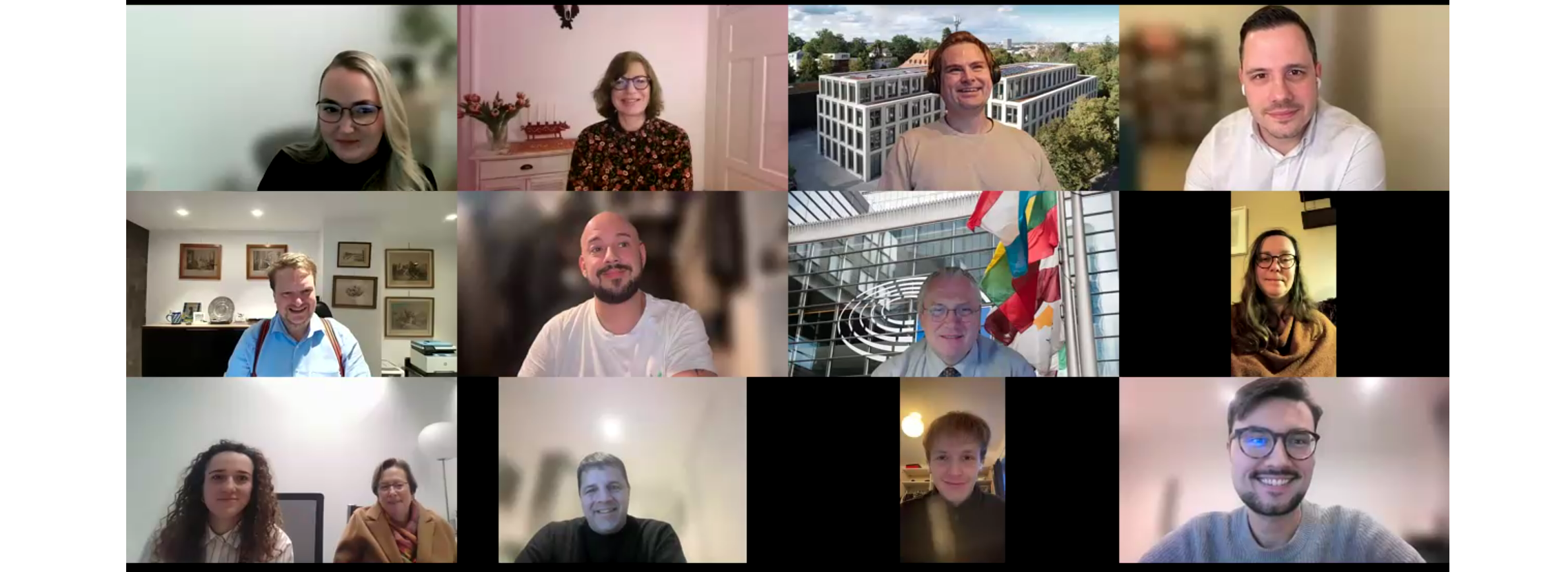
On 5 February 2026, the SME Connect Working Group on Entrepreneurship, Self-Employment & One-Person Companies convened to discuss its strategic priorities for 2026 and the political positioning of one-person companies within the European policy landscape. The meeting also marked the welcoming of Imelda Vital as the new Co-Chair of the Working Group. The meeting brought together entrepreneurs, association representatives and policy stakeholders to assess current legislative developments and identify concrete advocacy opportunities. Discussions centred on strengthening institutional access, addressing the persistent data gap concerning OPCs, and leveraging upcoming EU initiatives to enhance visibility and representation. Participants agreed that greater political recognition of one-person companies requires coordinated engagement at both institutional and communication levels
SME Envoy Sherpa
The SME Envoy Sherpa Network was discussed, with Junior Enterprises Europe sharing insights based on their experience with the format. The Sherpa network was recognised as a valuable channel for early access to policy discussions and for influencing SME policymaking upstream.
Lack of Data on One-Person Companies
Participants highlighted the continued absence of structured and reliable data on one-person companies at EU level. It was noted that existing statistics often subsume OPCs within broader SME categories, limiting visibility and hindering targeted policymaking. Exploring support from EU research services and collecting national best practices were discussed as initial steps to address this gap.
Definition of OPCs
The lack of a clear EU-level definition of one-person companies was identified as a core obstacle to coherent data collection and political recognition. Without a measurable category, OPCs remain largely invisible in policymaking processes. Establishing a common definition was identified as a potential political objective for 2026 and a prerequisite for future legislative and statistical progress.
OPC Summit 2026
The upcoming OPC Summit should aim to deliver concrete political outcomes rather than function solely as a networking event. The Summit was seen as a platform to support structured advocacy, potentially encouraging parliamentary initiatives. Preparatory research and institutional outreach were identified as priorities.
The 28th Regime
The objectives of the upcoming “28th Regime” proposal were discussed, particularly its aim to simplify company procedures through an optional EU-wide framework. While initially framed around scale-ups, recent indications suggest a broader scope. Participants noted that the initiative may not fully address fundamental internal market barriers, such as VAT fragmentation, but agreed that its political momentum should be used to highlight the needs of one-person companies.
Mobility and Social Security
Concerns were raised regarding the mobility of self-employed professionals within the internal market, particularly in relation to health insurance, pensions and social security coordination. Participants confirmed that cross-border activity remains administratively complex for OPCs. This was identified as a practical policy issue suitable for further development, with a need for clearer rules and improved portability mechanisms.
Digital and Marketing Regulation
Revisions to digital and marketing-related legislation were discussed, with concerns that new rules could disproportionately affect micro-entrepreneurs. Reference was made to earlier discussions highlighting regulatory uncertainty for small online businesses. Participants agreed that future digital legislation should avoid unintended burdens on OPCs and that engagement with relevant Commission services should be explored.
Visibility and Collective Identity
Participants noted that many one-person companies do not identify themselves as OPCs, contributing to political fragmentation. Strengthening collective identity and visibility was therefore considered essential. Ideas included positioning OPCs at the centre of a broader visibility narrative linked to the Summit and using testimonial-based communication tools. It was agreed that communication efforts must complement institutional advocacy.
Mental Health and Self-Employment
The relevance of mental health in self-employment was highlighted, particularly the isolation often experienced by solo entrepreneurs. An upcoming event on mental health and one-person companies was noted as an opportunity to broaden the policy agenda beyond economic considerations and to address social and human dimensions of entrepreneurship.
The meeting concluded with a shared understanding that 2026 should focus on institutional access, measurable visibility, and concrete political outcomes for one-person companies across Europe.