
Working Group Meeting: Artificial Intelligence, Data Economy and Cybersecurity (ADC)
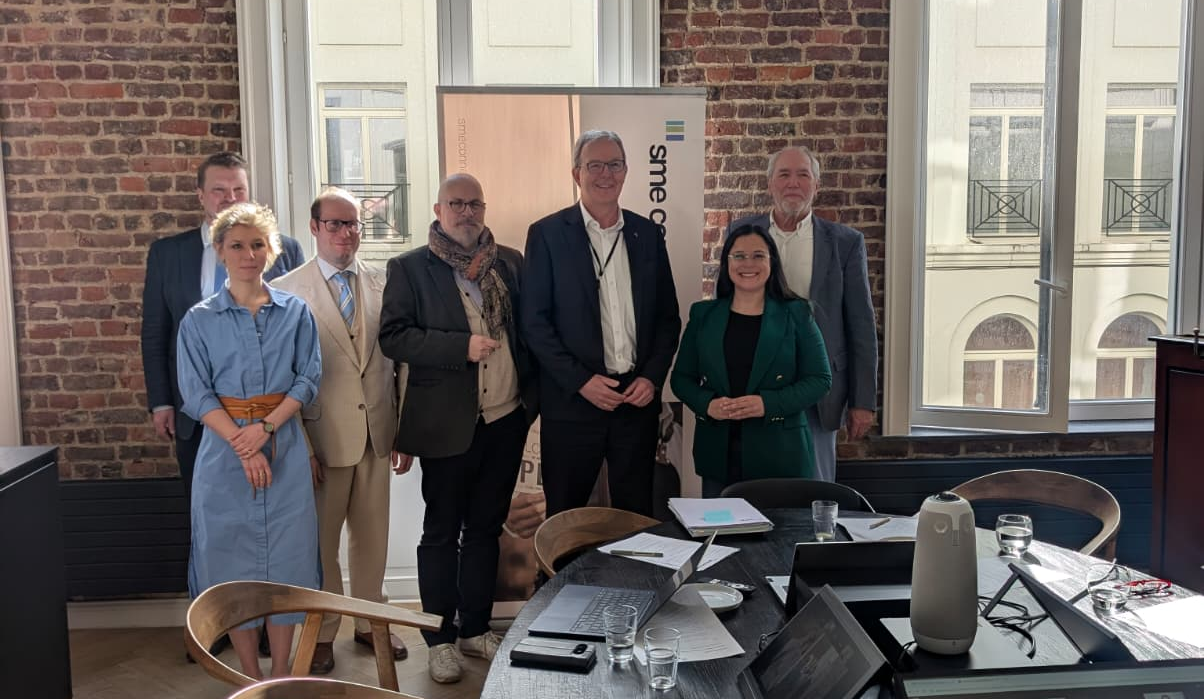
On 9 April 2026, SME Connect’s ADC Working Group held a meeting chaired by Axel Voss MEP and Josianne Cutajar, SME Connect Special Advisor and former MEP. The meeting brought together entrepreneurs, academics, policymakers, and specialists to discuss ongoing EU digital policy initiatives and their impact on SMEs. Participants exchanged views on how EU digital legislation can better support innovation and business growth while maintaining regulatory certainty.
Update on the EU Digital Omnibus
Discussions covered the AI Omnibus and Data Omnibus, which aim to simplify digital legislation and reduce regulatory fragmentation. Particular attention was given to the tight timeline linked to AI Act implementation and the need to avoid overlapping compliance requirements between the AI framework and sector-specific legislation.
Participants stressed the importance of legal certainty for SMEs, particularly regarding high-risk AI systems, and called for a more flexible regulatory approach able to adapt to rapid technological developments such as generative AI and AI agents. Several speakers underlined that simplification alone will not be sufficient to strengthen Europe’s competitiveness and highlighted the need for a broader strategic approach to the digital economy.
Browser-based consent mechanisms for cookies
Concerns were raised about proposed browser-based consent mechanisms for cookies under the Digital Omnibus. Participants noted that stricter consent requirements could reduce SMEs’ ability to analyse website performance, prevent fraud, personalise services, and maintain online visibility.
The discussion emphasised the importance of distinguishing between high-risk tracking practices and essential business-related cookies, such as analytics and functional cookies. Participants highlighted the need for balanced solutions that protect users while ensuring SMEs can continue to operate effectively in the digital environment.
European Business Wallet
The European Business Wallet was presented as a tool to simplify administrative procedures across the EU. The Wallet would allow companies to store verified digital credentials and share information with public authorities using the “once-only” principle, reducing administrative burden.
Participants emphasised interoperability with existing EU digital infrastructure and the importance of SME-friendly design to avoid disproportionate compliance costs. The initiative is expected to support cross-border activity and strengthen digital sovereignty through secure data sharing. Blockchain-based verification was mentioned as a possible solution to ensure authenticity and prevent manipulation of company documents.
European Competitiveness Fund
Participants discussed the role of the European Competitiveness Fund in supporting technological development and strengthening Europe’s strategic autonomy. Concerns were expressed about the complexity of funding structures and the absence of a clearly defined competitiveness strategy.
Speakers highlighted the importance of improving access to funding for SMEs and startups and ensuring stronger alignment between financial instruments and innovation objectives. The discussion also considered the need for more ambitious policy approaches, including targeted incentives or special digital economic zones, to attract investment and prevent companies from relocating outside Europe.

Presentation by Minimum Viable Compliance – MVC
MVC presented its work supporting SMEs navigating European and international regulatory frameworks for digital products and services. The presentation explained how businesses can manage regulatory complexity while bringing compliant digital solutions to market.
MVC provides:
- legal and regulatory guidance for digital services
- compliance strategies aligned with EU legislation
- support for market entry and scaling across jurisdictions
- risk mitigation strategies for AI-enabled products
The presentation emphasised the importance of integrating regulatory considerations early in product development in order to build trust and enable faster market expansion.
Participants are invited to the CRA Standards Unlocked – EU Tour (Malta) workshop on 21 May 2026 – online participation available, where experts explain practical steps for complying with the Cyber Resilience Act (CRA), including standards, documentation, and CE marking requirements for digital products. More information: https://cyberstand.eu/events/cra-standards-unlocked-eu-tour-malta
Watch the full presentation here: