
Personalized Prevention
— Harnessing science, technology and smarter nutrition for a healthier Europe
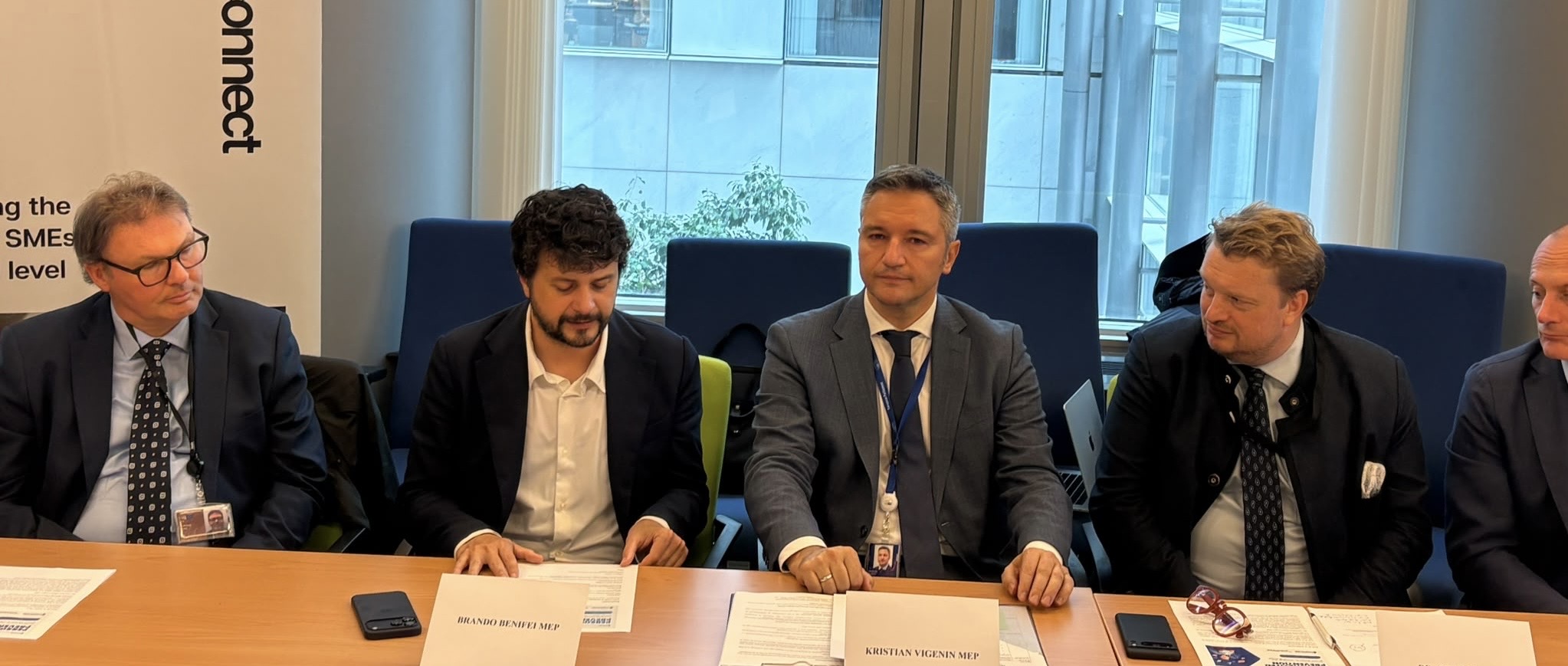
On the 16th of October 2026, SME Connect, in partnership with Competere.eu, organised a roundtable titled “Personalized Prevention: Harnessing Science, Technology and Smarter Nutrition for a Healthier Europe” at the European Parliament in Brussels. Hosted by Kristian Vigenin MEP and moderated by Horst Heitz, Chair of the Steering Committee at SME Connect, the event brought together Members of the European Parliament, nutrition scientists, digital health innovators, SME organisations and industry representatives to discuss how advances in biomedical research, wearable devices, artificial intelligence and nutrition science might be translated into prevention that reaches citizens and eases the pressure on Europe’s health systems.
Two questions ran through the afternoon. With the science increasingly able to tell individuals a great deal about their own biology, how can that knowledge be validated and made affordable? And what conditions would allow patients and practitioners to trust it? Participants generally agreed that the relevant measure is not the technology developed, but whether more Europeans avoid preventable disease and live longer in good health.
Kristian Vigenin MEP, host of the event and chair of the SME Connect working group on agriculture, nutrition and consumers, opened the discussion. Europe has succeeded in helping people live longer, he said; the next challenge is helping them live longer in good health. He pointed to cardiovascular disease as the leading cause of death in the Union, claiming some 1.7 million lives a year at an estimated economic burden above €282 billion, and noted a structural problem behind the figures: health systems are largely organised around treating disease rather than preventing it. Personalized prevention, in his view, should build on universal public health policy rather than replace it, should remain affordable rather than become a privilege, and should keep citizens at the centre — giving people the knowledge and tools to decide for themselves rather than telling them what to do.
Brando Benifei MEP, co-rapporteur of the AI Act and co-chair of the AI Act Implementation Working Group, addressed the question of trust. Available data suggest that neither patients nor health practitioners yet fully trust these technologies, he noted, and adoption tends to follow the sense that a technology is under the user’s control. He described work on the AI Omnibus, which simplifies and clarifies procedures for smaller businesses, and on the digital omnibus covering data and cybersecurity, adding that health data is a particularly sensitive category and that the rules need to remain coherent and workable for an SME. He then left for a meeting on the Cloud and AI Development Act.
The keynote, “From Population-Based Approaches to Personalized Prevention”, was delivered by Prof. Pietro Paganini, Chair and Curiosity Officer at Competere.eu. He opened with a scenario: a package arrives at your door containing food designed for your biology, your sleep and your schedule, ordered on your behalf by an AI agent you never consulted. Part of that is speculative, he acknowledged; part of it is already possible with wearables and consumer chatbots. His argument was that most areas of life are now personalised while prevention still addresses the average person, despite differences in metabolism, lifestyle and risk. He suggested policymakers look beyond labelling and taxation toward an emerging “agent economy”, in which software agents increasingly act on users’ behalf, and closed with a question that recurred through the afternoon: whether Europe intends to shape these technologies or adopt those developed elsewhere.
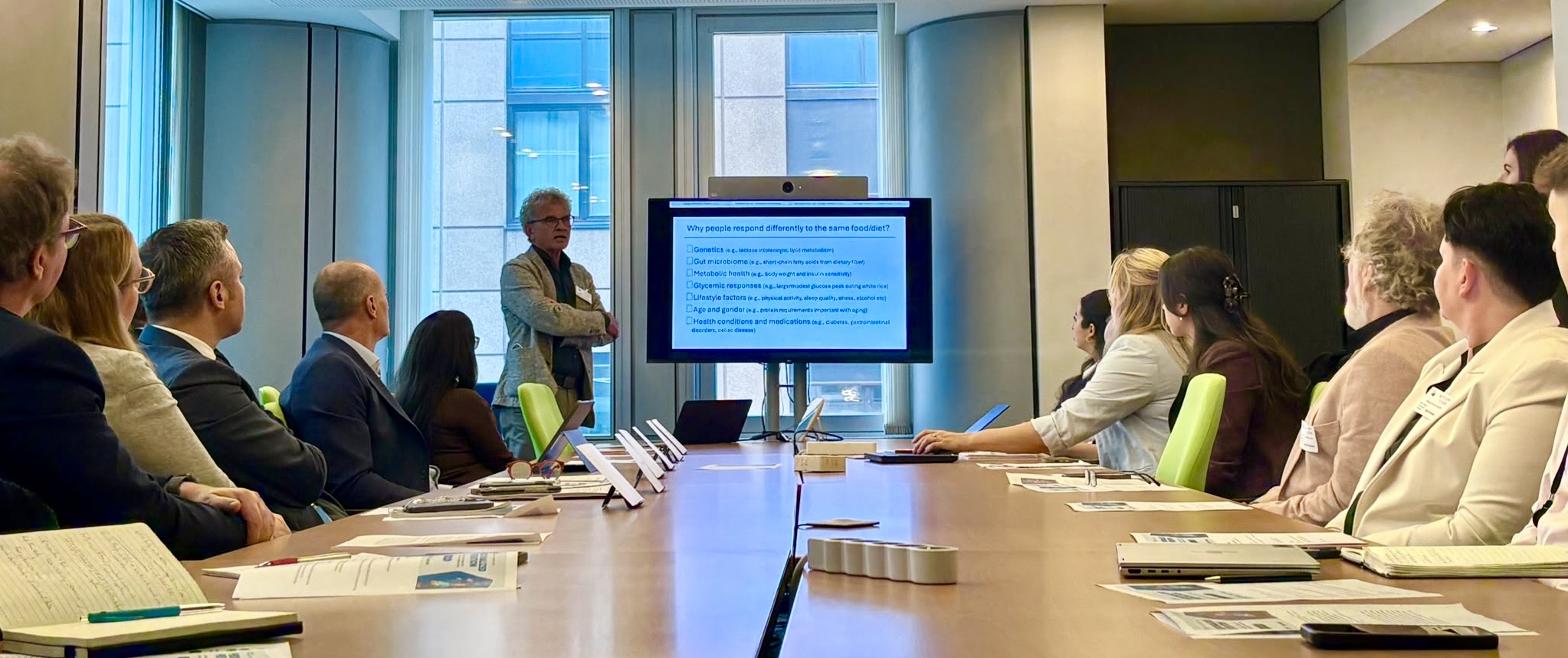
Prof. dr. ir. Frans Kok, Emeritus Professor of Nutrition and Health at Wageningen University, set out the evidence base for personalized nutrition. People respond differently to identical food because of genetics, gut microbiome, metabolic health, lifestyle, age and sex, and existing conditions or medication. He illustrated this with a controlled two-month experiment on himself, in which a month on an ordinary but unhealthy diet measurably worsened his blood pressure, heart rate, belly fat, fitness, liver enzymes, insulin and blood lipids — all of which returned to normal when he resumed his usual pattern. He then traced the field through three stages: documenting that responses vary, predicting individual responses from personal data, and testing whether those predictions improve health. In an 18-week randomised trial of 347 people, personalized advice significantly improved triglycerides, body weight, waist circumference and a prediabetes marker, though not every parameter. His conclusions were measured: genetic testing alone cannot identify an ideal diet, since most nutrition-related traits involve hundreds or thousands of genes with small effects; general dietary advice still works for most people; and prediction is not the same as causal understanding.
Dr. Anayanci Masís-Vargas, nutritionist, physiologist and neuroscientist, addressed two dimensions that dietary guidelines rarely cover: when we eat, and what light we live under. A single night sleeping with a dim lamp was enough to raise heart rate and next-day insulin in healthy people, while daylight exposure shifted diabetic men’s metabolism toward fat oxidation and brought glucose closer to the normal range. Later meals, eating out of step with one’s internal clock, and rotating shift work are each associated with less favourable metabolic outcomes, yet most Europeans spend 80 to 90 per cent of their time indoors and 90 per cent live under light-polluted skies. She proposed a layered model: universal guidance as the foundation, context-adaptive advice on timing, light, sleep, culture and budget, validated individual tools used with professional support where the evidence shows benefit, and food and body literacy as a public good. She also noted that consumer glucose monitors are not yet consistent enough to replace public guidance, and pointed to a digital literacy gap, with many people able to open an app and see a curve without being able to interpret it.
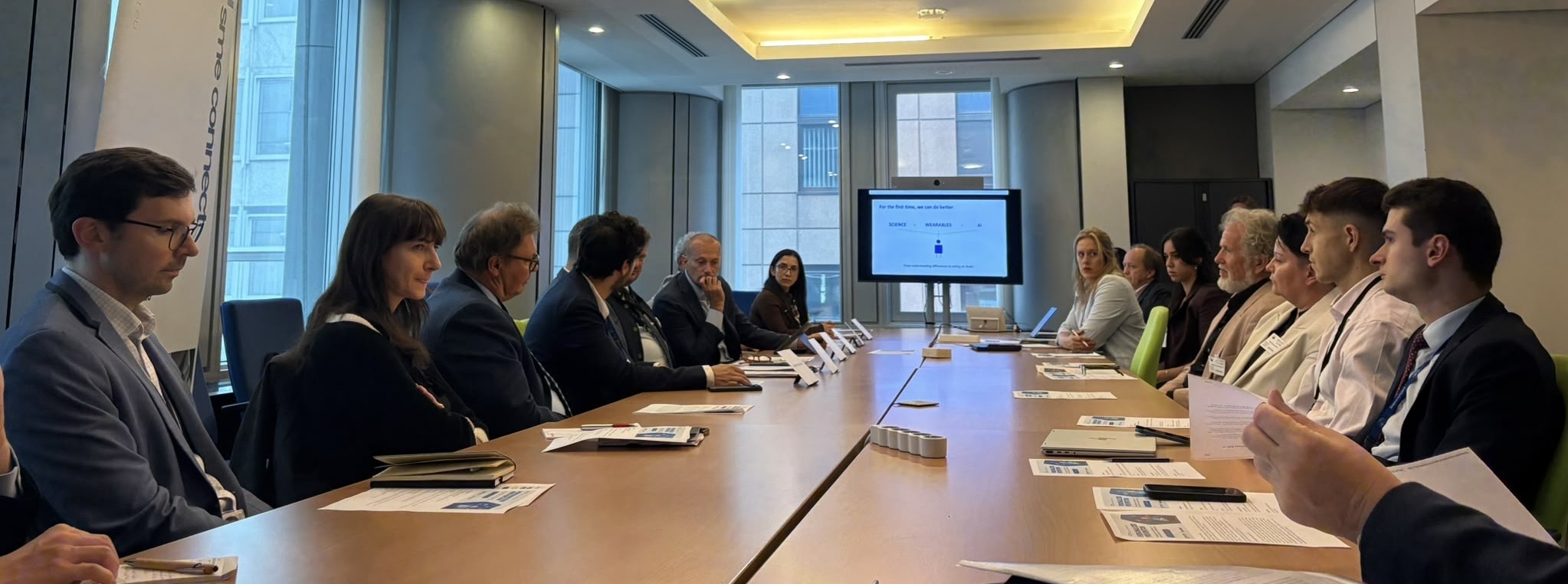
The open exchange that followed covered a wide range of ground. It began with data: lives are lost to information that hospitals do not share, yet health data is among the most sensitive categories there is, and the question of whether governments, insurers or private platforms should hold it was left open. Participants observed that incentives can penalise as easily as they reward — an insurer that lowers a premium for following a prevention programme can raise it for not doing so — and suggested incentives should encourage rather than punish. One attendee presented a European-hosted AI platform and was asked about where the data is processed, a practical illustration of the broader sovereignty question. Further contributions addressed commercial influence over AI-generated advice, supplement claims that outrun the evidence, the standardisation and validation that would allow trusted tools to scale, so-called “wearables fatigue”, and the possibility that users raised on these tools come to rely on them in place of their own judgement. There was broad agreement that AI should support health education and professional judgement rather than replace them, and that people, not agents, should retain the decision.
Kristian Vigenin MEP closed the roundtable by noting that the discussion had only been opened, and said he would take it forward on the basis of what had been agreed. There was a notable degree of convergence across the table between policymakers, scientists and industry — Prof. Paganini observed at the outset that the host had already made much of the case he had come to present.
Participants broadly agreed that prevention belongs closer to the centre of European health policy, and that health systems should be rewarded for preventing disease rather than only for treating it. There was support for personalization that builds on universal public health rather than replacing it, for an approach that treats nutrition, movement, sleep, light, timing and stress as interconnected rather than relying on a single test or biomarker, and for making the instruments Europe already has — the European Health Data Space, the AI Act, the cardiovascular health plan and the emerging Biotech Act agenda — work together rather than in parallel.
The exchange was equally clear about what confidence depends on: whether personalized prevention remains affordable and accessible rather than reaching only those who need it least, whether validation and standardisation keep pace with the tools being sold, whether sensitive health data can be protected without blocking research, and whether regulation stays feasible for the smaller businesses expected to build on it. Europe does not lack the science, the institutions or the companies willing to act; what the field now needs is validation, affordability and trust. As a concrete next step, Competere.eu will publish its analysis of sugar taxation, labelling, reformulation and prevention policy within two weeks, and offered it to all participants.