EU–India Strategic Partnership:
— Building a Trusted Partnership for Shared Growth, Security and Global Leadership
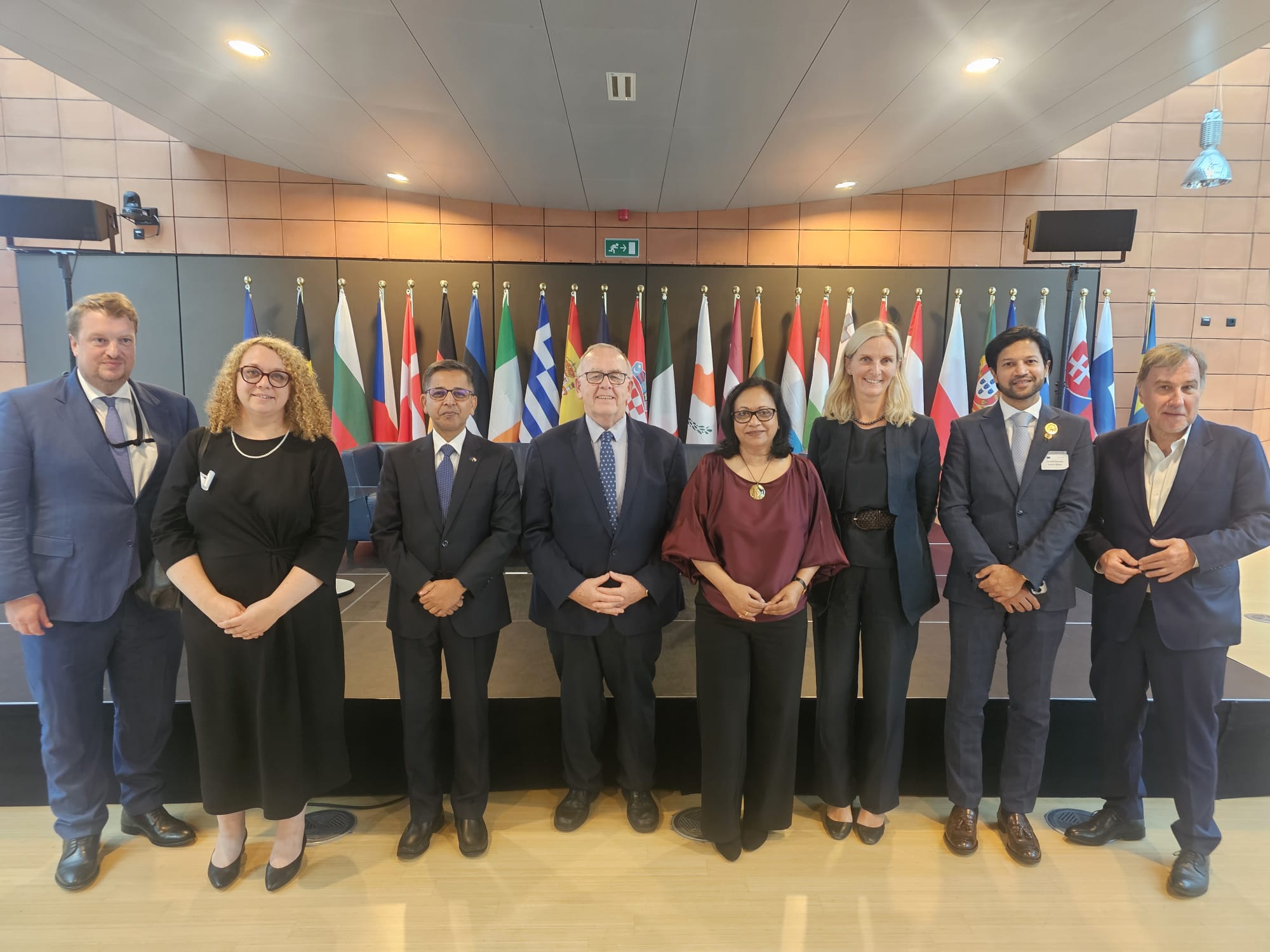
On the 05th of October 2026, SME Connect in partnership with European Economic and Social Committee, organised a conference titled “The EU–India Strategic Partnership: Turning Ambition into Opportunity” in Brussels. The event brought together representatives of the European institutions, the Ambassador of India to the European Union, the President of the European Economic and Social Committee, European business confederations, SME organisations and practitioners from across sectors to examine how the newly concluded EU–India free trade agreement, together with a new security and defence partnership, can be turned from political ambition into concrete advantage for Europe’s and India’s smaller businesses.
The discussion returned repeatedly to a single word — trust — and to one practical question. With the negotiations now concluded, how can the partnership be made to work on the ground, for companies that must actually trade, invest and hire on the strength of it? Participants were clear that success should be measured not only in trade volumes or tariff reductions, but in what the agreement delivers for workers, communities and citizens on both sides. At a time of growing protectionism and pressure on the multilateral system, Europe and India have an opportunity to demonstrate that cooperation can produce greater global stability.
Séamus Boland, President of the European Economic and Social Committee, set the tone for the day. Recalling that the EESC had called in a 2025 opinion for a far more ambitious relationship between the two partners, he argued that the conclusion of the negotiations was the moment to turn that ambition into facts. The measure of the partnership, he insisted, would not be the headline numbers but what it ultimately delivered for ordinary people, and the growing pressure on the international order made the case for cooperation more urgent rather than less. Srita Heide, Chair of Global Business & Trade at SME Connect, framed the relationship as an ideal connection between independence and connected interdependence — two distinct cultures combining their strengths in the service of a shared humanity — before welcoming the Ambassador of India.
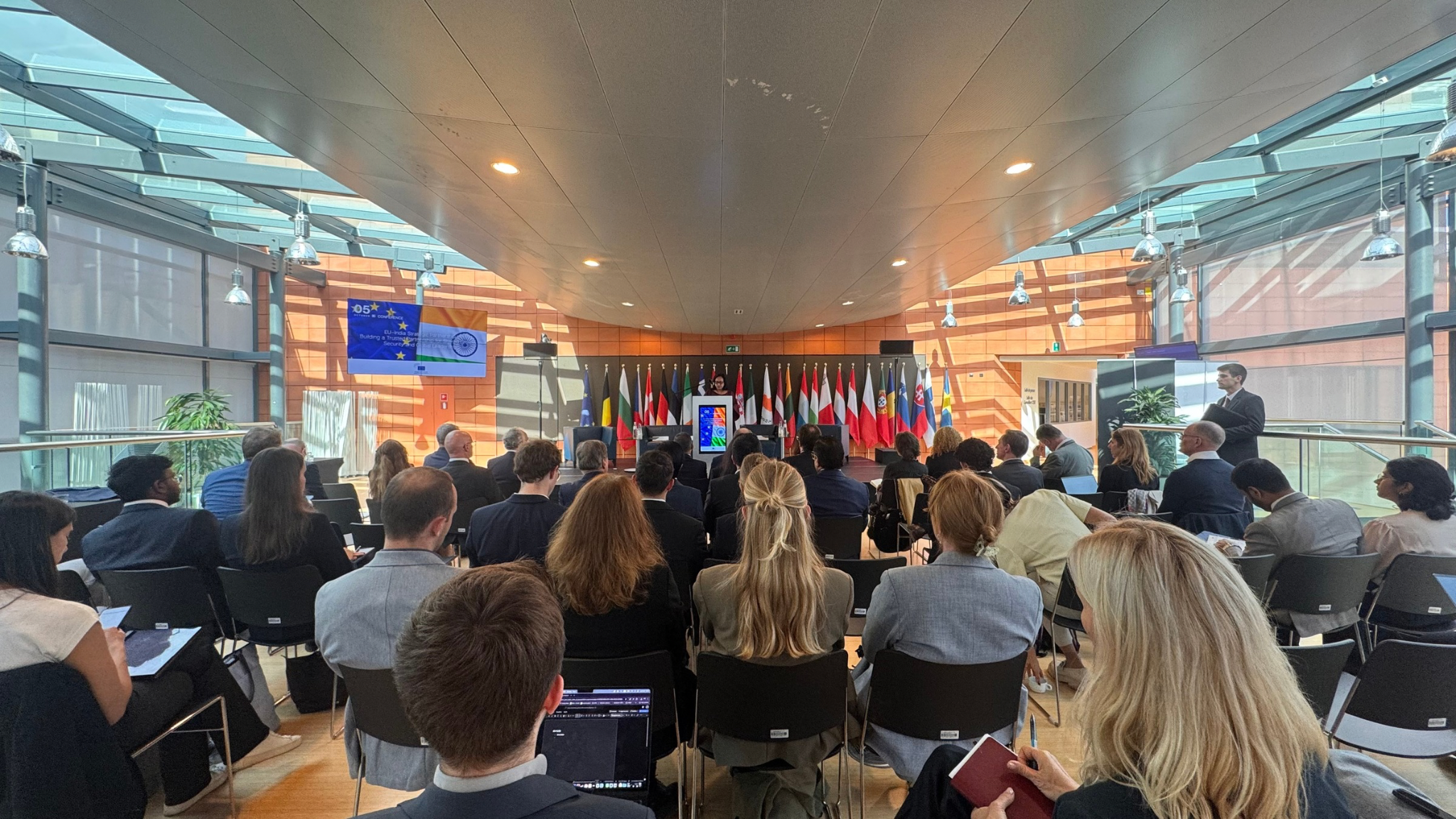
The Ambassador of India to the European Union described a strategic partnership that has become far more substantial in a remarkably short time. A proactive effort to engage each EU member state individually, he explained, had accelerated the momentum, and the trade agreement was the manifestation of a shared sense of urgency and mutual benefit at a moment of global protectionism. The relationship, he argued, now rests on more than economic ties: a convergence of principles and a common vision of a multipolar order geared towards sustainable development. The free trade agreement is the economic pillar of a comprehensive strategic agenda reaching to 2030, complemented by a newly signed security and defence partnership that will pursue industrial collaboration while taking advantage of India’s cost-effective manufacturing capability.
He pointed to the habit of consultation now being built through the India–EU strategic dialogue, to the scope for cooperation on third countries in the Indo-Pacific and project financing in the Global South, and to the India–Middle East–Europe Economic Corridor, whose early realisation he said was firmly in both parties’ interest. India, he noted, is young, fast-growing and an emerging innovation hub, and it places particular emphasis on strategic autonomy and reliable partners — making the European Union a natural partner in securing critical supply chains and advancing technology and security together.
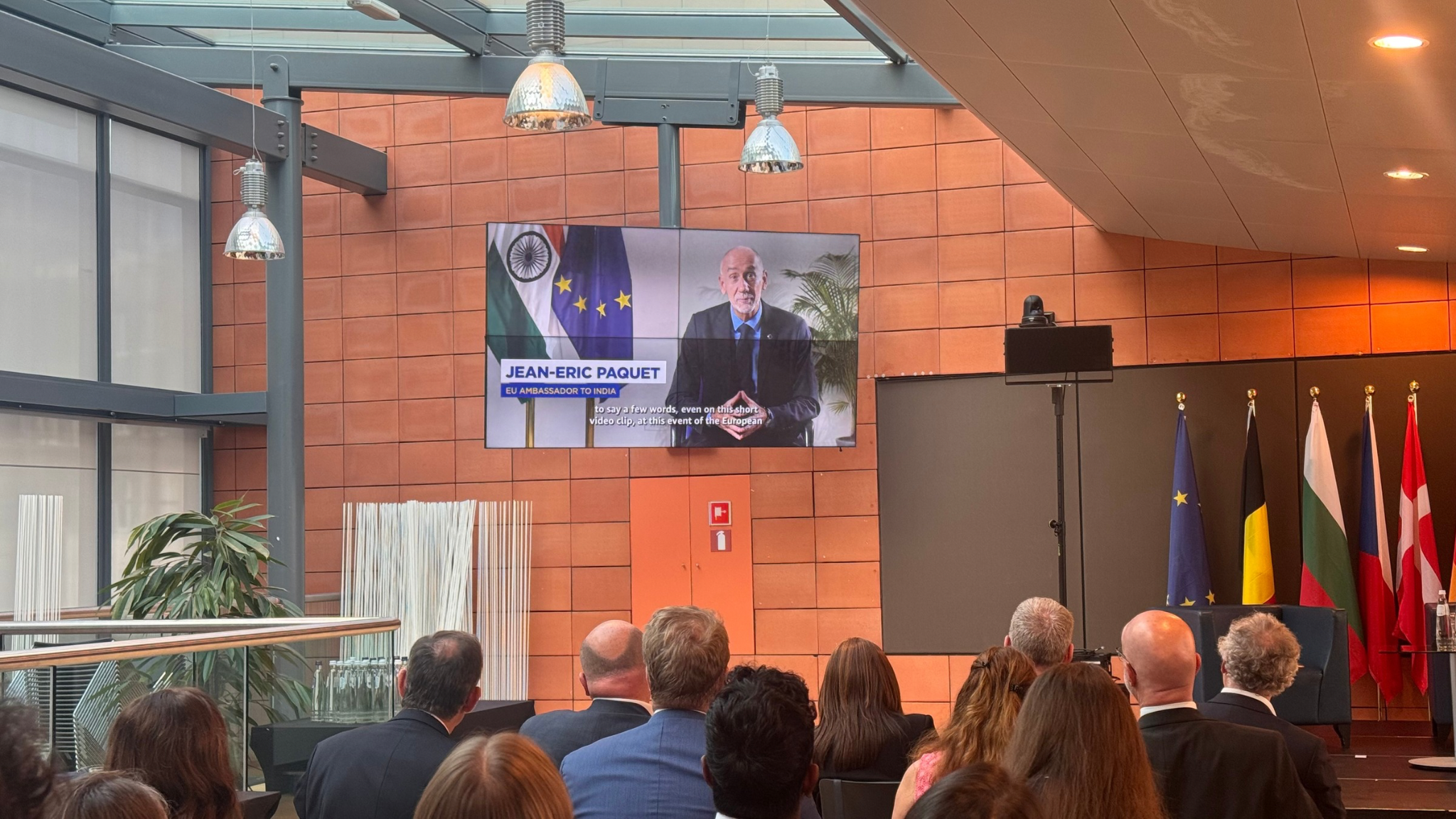
The Ambassador set out three points in closing. First, that with a combined market of well over a billion people and shared values of a pluralistic society and a market economy, the European Union and India are uniquely positioned to help stabilise the international environment. Second, that the agreement opens the door to one of the world’s largest economies, offering European companies a distinctive opportunity to build as investors, innovators and service providers. And third, that as companies everywhere seek to diversify production and strengthen their own strategic autonomy, Europe and India are natural partners in that effort. In a video message, the Ambassador of the European Union to India, added that the two sides are negotiating an investment protection agreement in parallel, and underlined their shared stake in a functioning multilateral system. He welcomed the conclusion of the negotiations as a milestone for both partners and stressed that sustained engagement on the ground would be essential to realising the agreement’s full potential.
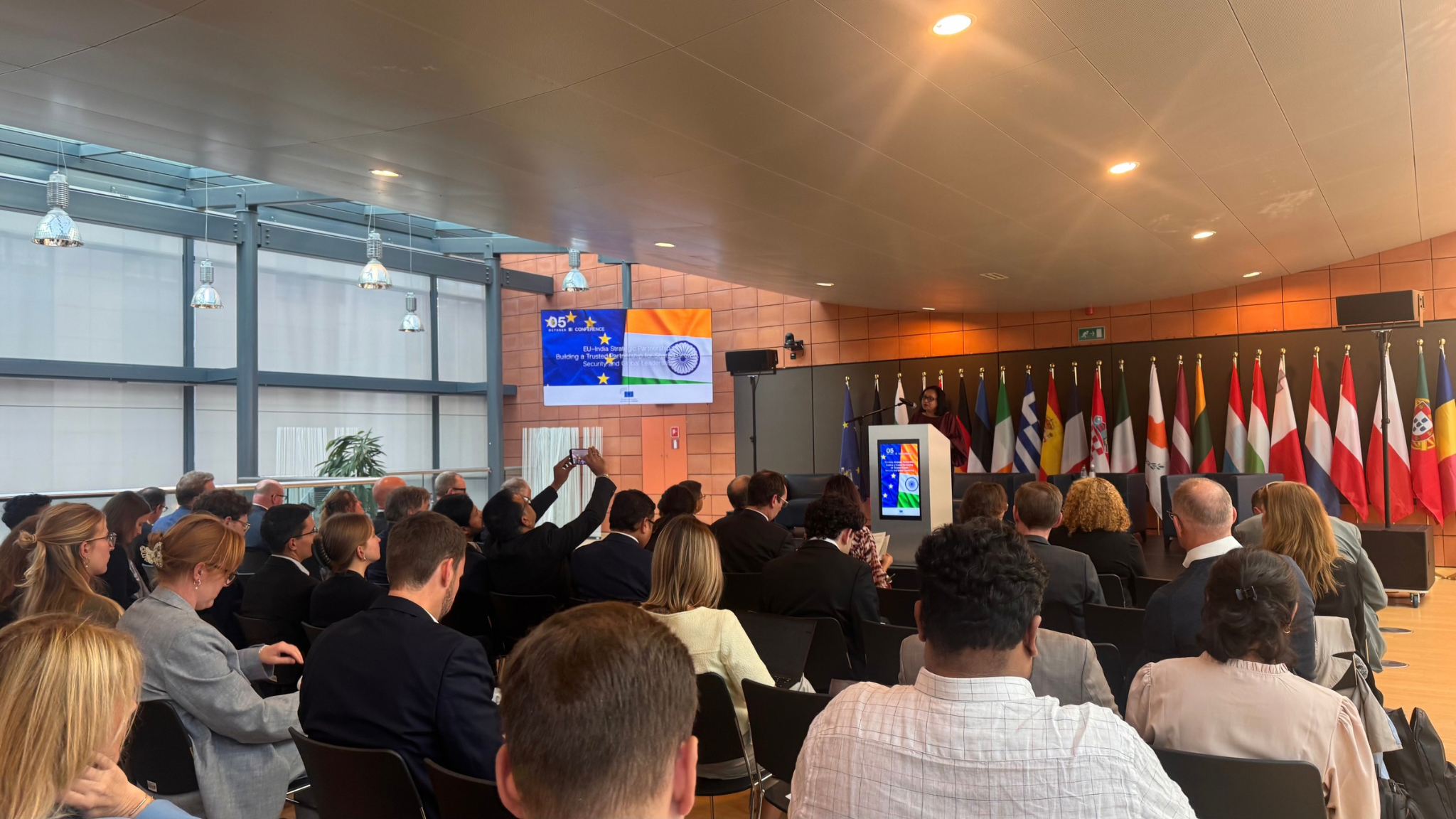
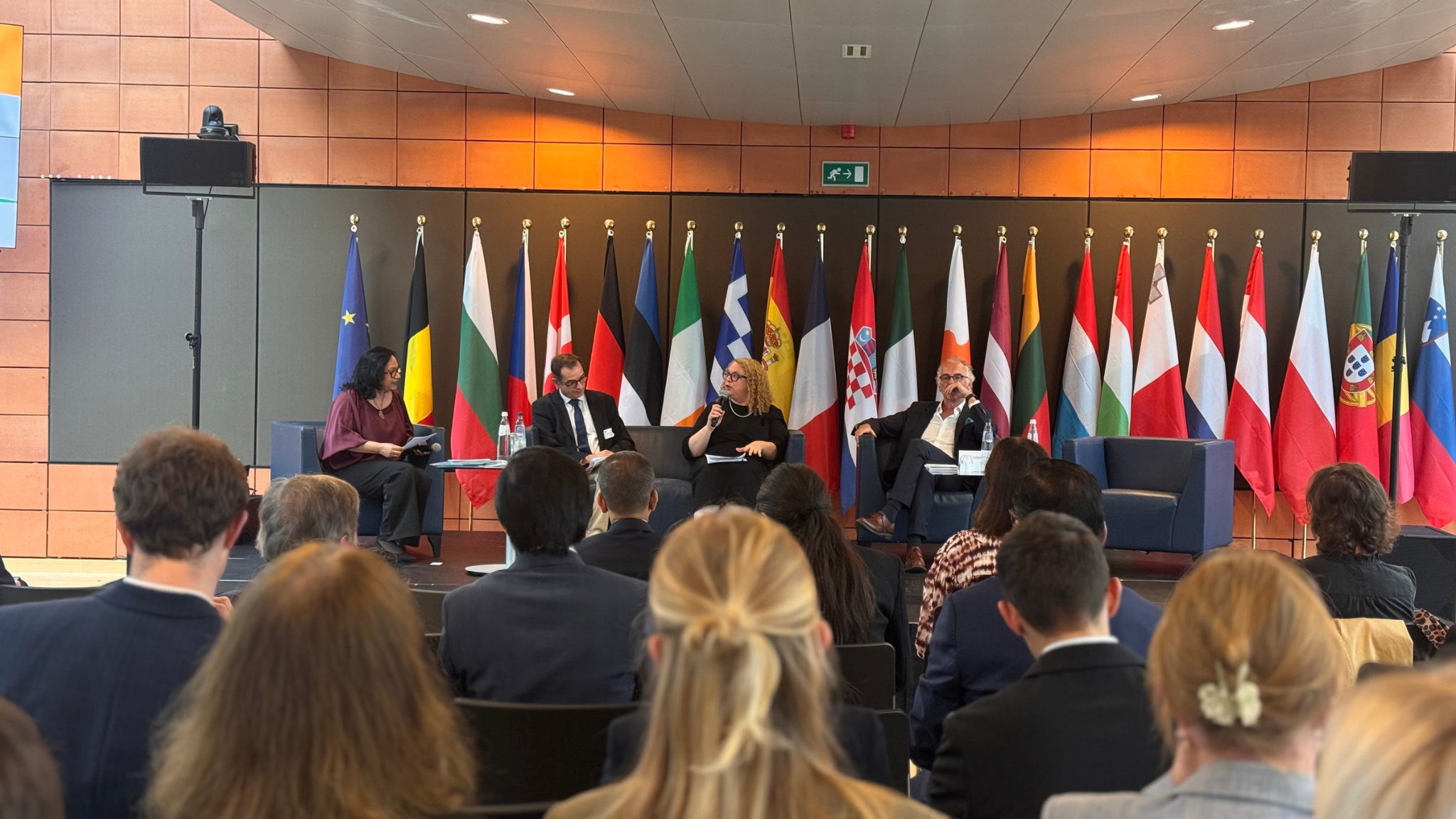
The first panel, “Setting the Direction: EU–India Partnership in a Changing Global Landscape”, turned to what the business community actually expects. Ben Butters, CEO of Eurochambres, said European businesses are genuinely excited by the new opportunities, but that enthusiasm has to translate into concrete deals: the enormous headline potential must be broken down into something an SME across the EU can use. He pressed the point that non-tariff barriers — intellectual property among them — matter as much as tariffs, and noted that Indian companies trading into Europe face their own difficulties from the incompleteness of the single market.
Darya Galperina, Director of International Public Affairs at Pernod Ricard, spoke from nearly thirty years of operating in India, where the company now makes the overwhelming majority of its production and employs tens of thousands of people directly and indirectly. European spirits account for less than one per cent of the Indian market, she observed, yet India is already the second-largest market for Irish whiskey after the United States — a sign of the headroom the agreement could unlock as the slowdown in other major markets concentrates attention on India. The real value of the FTA, she suggested, lies in the framework it creates to discuss standards, definitions and shared challenges, and the dedicated sector forum it establishes is a significant step towards more diversity for consumers, stronger investment and jobs on both sides.
Stefan Louis, CEO of Simmol, described moving from a Swiss office to Gujarat, building a factory and bringing it to profitability in a market where demand for energy-storage technology is rising sharply but technical expertise remains scarce. He made the case for a dedicated EU–India energy-storage partnership built on technology licensing, joint industrialisation, shared engineering, and factory-to-factory cooperation, with safety, performance and circularity designed in from the start. On the recurring question of trust, his answer was disarmingly practical: trust is built by spending time together, and it can be transferred from one partner to the next.
Dharmesh Gandhi, CEO of Dia9 and Chairman of the Antwerp Indian Association, who has spent 27 years in the diamond trade, put trust at the centre of his remarks. The opportunity, he argued, now extends far beyond diamonds, and he set out four practical tests for the partnership: market access, measured by how many SMEs can actually enter each other’s markets with clear guidance and simpler procedures; predictability, especially clarity on customs, documentation and reliable banking; connectivity, including a direct air link between India and Belgium to make business visits easier; and trust, best cultivated by investing in the entrepreneur associations that already know both markets. Asked whether an EU–India SME conference in Brussels might follow, Butters replied that it was entirely possible — and worth discussing.
The second panel, “Shaping the Future: Cross-Sector Perspectives on EU–India Cooperation”, drew out how different industries are preparing. Bernard Lombard, Trade and Industrial Policy Director at Cepi, the Confederation of European Paper Industries, pointed to the sheer room for growth: the European Union has levied no tariff on paper imports since 2004, while exports to India face a duty of around twenty per cent, and per-capita consumption in India sits far below European levels. The agreement should eliminate tariffs over seven to ten years, he noted, but import-monitoring systems and a difficult tax regime must not be allowed to replace the barriers that tariffs remove — and India’s many state-level differences make the non-tariff agenda all the more important. Sustainability, he added, is an area where the two industries can improve together rather than compete.
Pauline Bastidon, Director of Competitiveness and Trade at spiritsEUROPE, speaking to a food-and-drink sector that is overwhelmingly made up of SMEs, identified meaningful market access in both directions — European wines and spirits into India, and tea, coffee, botanicals and spices out of it — as the first prize, with only a narrow set of products such as dairy excluded. Just as important, she argued, are the provisions to reduce non-tariff barriers and the mechanisms for ongoing dialogue and rapid reaction when new barriers appear. Her central warning concerned timing and implementation: the agreement must enter into force as quickly as possible, with customs authorities ready so that business can benefit from day one, particularly as the United Kingdom already enjoys preferential access. Over the longer term, she said, the hardest problems — monopolies, late payments and taxation — sit at state level, and that is where things must become easier.
Dirk Vantyghem, Director General of EURATEX, the European Apparel and Textile Confederation, offered a frank account of a sector that stands to gain but also feels exposed. The European and Indian textile industries are comparable in size, yet some fifty million people work in textiles in India against roughly 1.2 million in Europe, and the European Union imports around seven billion euros of Indian textiles while exporting under one. His members’ concern is that tariff reductions could simply be replaced by other barriers, and that hard-won sustainability standards might erode once borders open. The answer, he argued, is open dialogue and systematic monitoring: EURATEX had already launched a dialogue with the Confederation of Indian Textile Industry in July to track the correct implementation of the agreement.
The closing panel, “The EU–India Partnership: A Foresight Perspective”, looked further ahead. Monika Bylaite, Deputy Head of Division for South Asia at the EEAS, observed that what has been built in the last two years would usually take decades, a measure of the ambition and trust now in place. India offers scale, skills, engineering capability and a large and growing market, she said, and the real prize is more resilient value chains built together; in her view the agreement is already delivering as a catalyst for dialogue and ideas, and walking through the door it opens is the next step. Frank Geerkens, former Ambassador and Consul General of Belgium, cautioned that the negotiation, which took more than two decades, was the easy part — implementation is where the work now lies. Europe and India, he suggested, are both “elephants,” democracies and free markets contending with complex, fragmented home markets, while the United States and China draw their strength from being the most unified. Closing the gap will require political decisions on simplification, on innovation and AI, and on energy security — and in democracies, that takes time.
Srita Heide closed the exchange around three themes: region, business and people. Regional cooperation, she argued, is essential to addressing shared geopolitical problems; businesses should keep to the discipline of a plan with clear short-, medium- and long-term goals, reviewed as circumstances change rather than fixed; and success depends on finding the right people and on a kind of strength that is not only commercial but emotional — the capacity to work across real cultural differences. On the barriers facing Indian companies entering Europe, she noted the sheer weight of rules, regulation and bureaucracy, and a different sense of time: a process that takes six months in Europe might take two to four weeks in India, which makes careful planning indispensable.
Horst Heitz, Chair of the Steering Committee at SME Connect, drew the threads together, describing India as a genuinely promising market for SMEs. On the question of timing, the message from the EEAS was unambiguous: the procedure will be followed to the letter, there is sufficient support in Parliament, and there is no intention of delay.
The conference demonstrated broad agreement that the EU–India partnership matters, and that the decisive question is now implementation rather than ambition. Participants saw real value in market access that smaller companies can actually use, in sector dialogues that translate the agreement into workable rules, and in the deeper industrial cooperation that energy, textiles, food and drink, paper and services could support.
At the same time, the exchange was candid about what confidence depends on: whether tariff reductions are matched by progress on non-tariff and state-level barriers, whether the agreement enters into force quickly and with customs ready, and whether banking, connectivity and predictability improve enough for an SME to take the risk. The message from the room was consistent and clear. Europe and India do not lack ambition or capable businesses willing to trade. What the partnership now needs is speed, clarity and trust — and a shared determination to keep the opportunities as firmly in view as the obstacles.