
Defending the Future – Drones and European Security
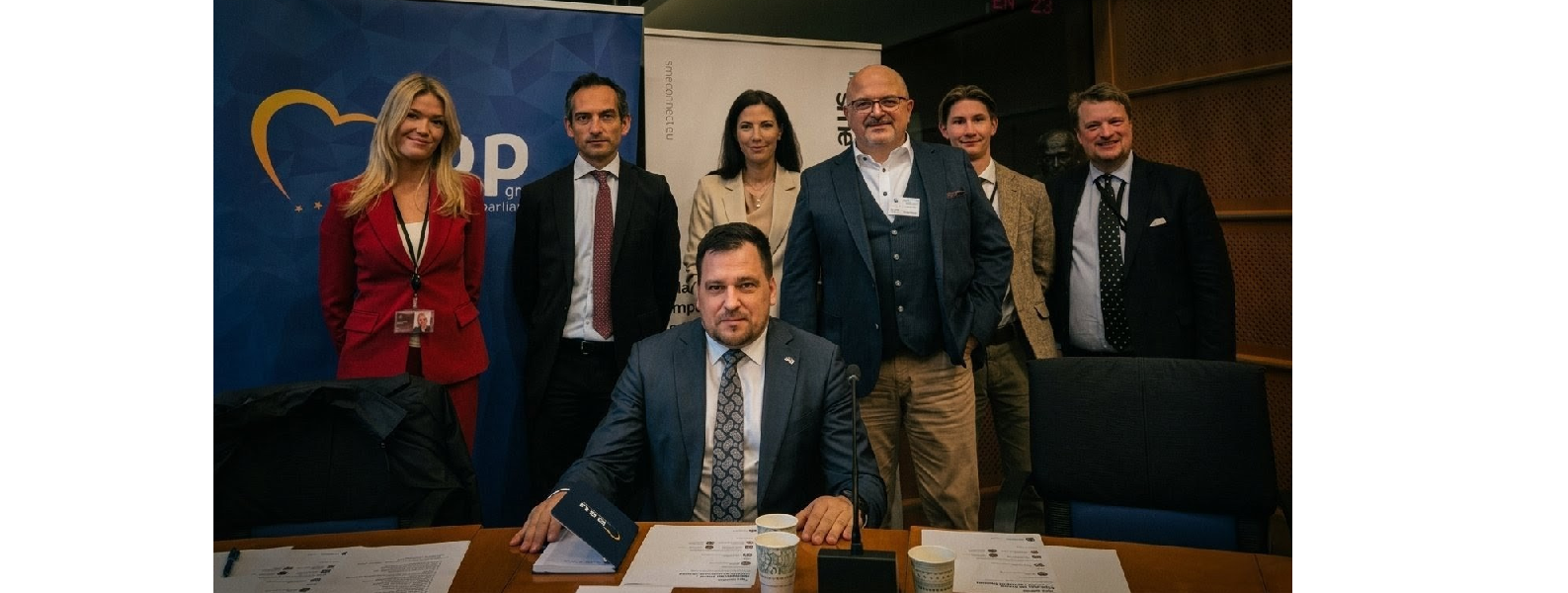
On 6 May 2026, SME Connect organised a high-level strategic dialogue at the European Parliament titled “Defending the Future – Drones and European Security”, in partnership with European Business Summits. The event was hosted by Tomáš Zdechovský MEP, Co-Chair of the SME Connect Defence and Security Working Group, and moderated by Horst Heitz, Chair of the Steering Committee of SME Connect, brought together defence industry representatives, SME innovators, and EU policymakers to examine the structural shift that drone technology is driving in modern conflict and European security strategy.
TOMÁŠ ZDECHOVSKÝ MEP opened providing a sobering analysis based on first-hand insights from the Czech Republic’s military support for Ukraine over the past ten to eleven months, asserting that the traditional dominance of heavy armored vehicles has been permanently superseded by the era of drone warfare. He illustrated this through the dramatic cost-asymmetry currently witnessed on the front lines, where disposable drones costing as little as 300 to 400 Euros are consistently neutralizing high-value military assets worth between 50 and 80 million Euros. Zdechovský underscored that the Czech Republic alone now hosts more than 300 drone producers, and he urged the European Commission to accelerate the development of a unified European platform to coordinate these diverse SME efforts while maintaining a strict “China-independent” supply chain to protect the integrity of military data and avoid reliance on adversaries.
Following this, GUILLAUME DE LA BROSSE, Head of Unit for Defence Policy and Innovation at DG DEFIS, detailed the Commission’s strategic response through the implementation of the “Agile” program, which is specifically designed to bypass traditional bureaucratic delays and shorten defense innovation cycles to a timeframe of just one to three years. He acknowledged that while Europe possesses an abundance of technical talent and intellectual property, there is a critical shortage of risk capital, citing a necessary 20 million Euro pilot project, to help innovative startups scale their operations into mass production. De La Brosse emphasized that the Commission is actively mapping strategic dependencies to ensure that European innovation can be translated into EU-standardized products, thereby creating a resilient internal marketplace that reduces foreign reliance.
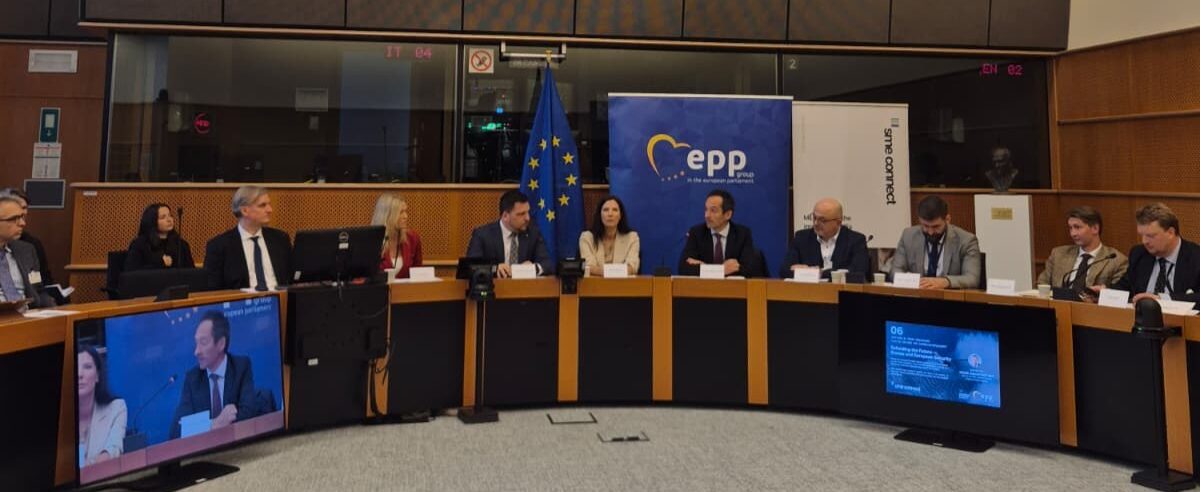
The industrial challenges were then articulated with striking clarity by FRITZ V. STÜLPNAGEL, Managing Director, DefenceTech Europe, who utilized a culinary analogy to argue that while Europe currently possesses all the necessary “ingredients”-including a sophisticated industrial base, advanced AI expertise, and engineering talent-the “recipe” for continental success remains fundamentally broken. He pointed to the crippling fragmentation caused by 27 separate national markets and criticized the absurdity of internal European export controls, where shipping a single component across an internal EU border can trigger bureaucratic reviews that outlast the actual innovation cycle of the technology itself, effectively stifling the speed required for modern warfare.
ANNA RUZICKOVA, Chief Executive Officer, S-Tech Ventures, provided a manufacturer’s reality check, explaining that the true strategic leverage in drone technology does not reside in the outer frame but in the mastery of the internal ecosystem, particularly the software and the electric motors. She detailed her company’s struggle to establish domestic production lines for specialized components like magnets to break Chinese dominance, warning that without a commitment from European governments to buy at scale, the continent’s most innovative firms will continue to be forced to export their best technologies to the Middle East or India just to survive.
KAREN JENSEN, Defence Programme Manager, European Business Summits, added a critical perspective on the structural biases inherent in current procurement, noting that approximately 70 to 90% of all defense contracts are still awarded to a small circle of the top ten established companies, which creates a significant barrier for the very SMEs that are driving the drone revolution. She emphasized that the European Business Summit remains a committed partner in this mission and formally invited all stakeholders to the upcoming European Defence and Security Summit on June 23-24, where these complex issues will be further targeted to ensure the SME perspective is fully integrated into the broader European defense agenda.
ANDREY NOVAKOV MEP, Member of the Committee on Security and Defence (SEDE), then issued a passionate call for Europe to move from theoretical discussion to concrete, collective action, arguing that the continent’s defense procedures are currently too slow for a world where technological reality on the battlefield changes every week. He stressed that in a state of conflict, the priority must shift to the absolute preservation of freedom and security, citing the massive daily influx of thousands of Chinese parcels as a metaphor for the scale of production and logistical speed that Europe must achieve to protect its own interests.
Finally, MARKUS BECKER, Head of Business Development, Intralogistics LTW and Co-Chair of the SME Connect Defence and Security working group, provided a strategic reflection on the future of the working group, noting that the objective established four years ago to open structured pathways for SMEs into defense value chains is now a matter of urgent geopolitical necessity. Becker highlighted the often-overlooked importance of logistics as a pillar of defense readiness, advocating for the development of dual-use concepts that bridge civilian industrial capabilities with military requirements for rapid deployment and secure storage. He specifically argued that enabling technologies such as drones for infrastructure protection and the monitoring of transport lines are essential for building the resilient, modern logistics systems that a war-ready Europe requires.
The event concluded with a powerful consensus that the “spirit” of the gathering was one of profound transition, signaling a collective departure from a peacetime mindset toward a posture of genuine war-readiness characterized by industrial resilience, rapid scalability, and the strategic integration of SME-led innovation into the heart of European security strategy.
Follow the work of the SME Connect Defence and Security Working Group.