
Europe’s Economic Future:
Caught Between Protection, Competition, and Political Narratives
About our series
This event is the second in a three-part series titled “Europe’s Economy – The Foundation of Security and Freedom”. The focus will lay on the pivotal role that economic strength plays in ensuring Europe’s security and democratic freedom, and the need for a crisis-resilient, strategically autonomous, and prosperous economy to face the geopolitical pressures and internal strains currently facing us. Throughout the series, experts will convene to map current vulnerabilities threatening Europe’s security, define the economic capabilities for shielding against such risks, and set a plan for how to prioritise EU policies to further strengthen this protective potential.
About the event
Europe’s economic model, and with it its political decision-making structures, is increasingly being put to the test. As global competition intensifies and geopolitical dynamics become more confrontational, fundamental assumptions about openness, competitiveness, and the role of the state are being reassessed. This raises a central question: How resilient, and how secure, is Europe’s economy in a changing global
environment? And how can it be strengthened so that it contributes to Europe’s broader stability and security?
Major economies are making more active use of industrial policy, subsidies, and strategic investment. In this context, economic and security interests are increasingly intertwined, and economic tools are being used as instruments of geopolitical influence. At the same time, established rules of international trade are coming under pressure, while some actors leverage unfair practices, market distortions, and asymmetric dependencies to advance their strategic interests. This contributes to supply chain risks, geopolitical tensions, and security challenges—particularly in critical technologies, energy, and infrastructure.
The European Union is responding with a dual approach. On the one hand, it seeks to strengthen competitiveness through reforms such as the “Simplification Offensive.” On the other hand, it is advancing protective and strategic measures, including the Net-Zero Industry Act, the broader agenda of the Clean Industrial Deal, and proposes the Industrial Accelerator Act, which place greater emphasis of strengthening Europe’s own industrial capacity in strategic sectors. . These developments highlight the growing importance of industrial capacity, strategic sectors, and resilience, while also reflecting a broader political debate about Europe’s economic, technological, and security orientation.
What makes this debate particularly complex is that it is no longer purely economic. It is increasingly shaped by political narratives, electoral pressures, and, at times, simplified public framing. Concepts such as “strategic autonomy” or “Made in Europe” can reflect genuine strategic approaches, but they can also become political slogans. At the same time, the defence of open markets can turn into a rigid position if it does not adapt to the structural shifts in global trade.
This brings a more fundamental level into focus, not only in policymaking, but also in the broader societal debate, which is becoming increasingly contested in times of economic uncertainty and transformation:
What does Europe’s economy actually need to remain resilient and competitive? Where is protection justified, and where does it become counterproductive?
Ultimately, the issue is not only about specific policy tools, but also about how Europe frames and negotiates its economic choices politically and societally.
Is Europe engaging in a truly strategic economic debate, or one shaped by entrenched positions, political pressure and simplified narratives?
-
REGISTRATION AND DRINKS
-
OPENING
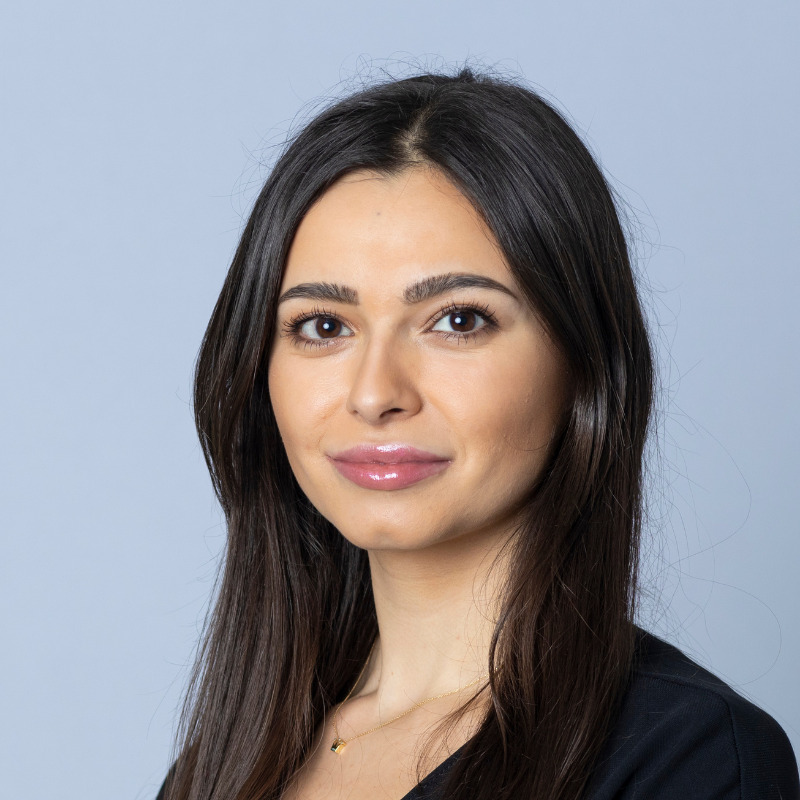 LUSYNE KESZISZJAN
Head of Office, European Enterprise Alliance
-
MODERATION
 HORST HEITZ
Chair of the Steering Committee of SME Connect
-
FIREPLACE DEBATE WITH DRINKS & SNACKS
 STEFAN ŠIPKA
Head of Sustainable Prosperity for Europe, European Policy Centre
 HENRIK REIMER
Head of Brussels Office, Pharma Deutschland