
Agentic AI: Opportunities and Challenges
— How Can Europe Prepare for What Comes Next?
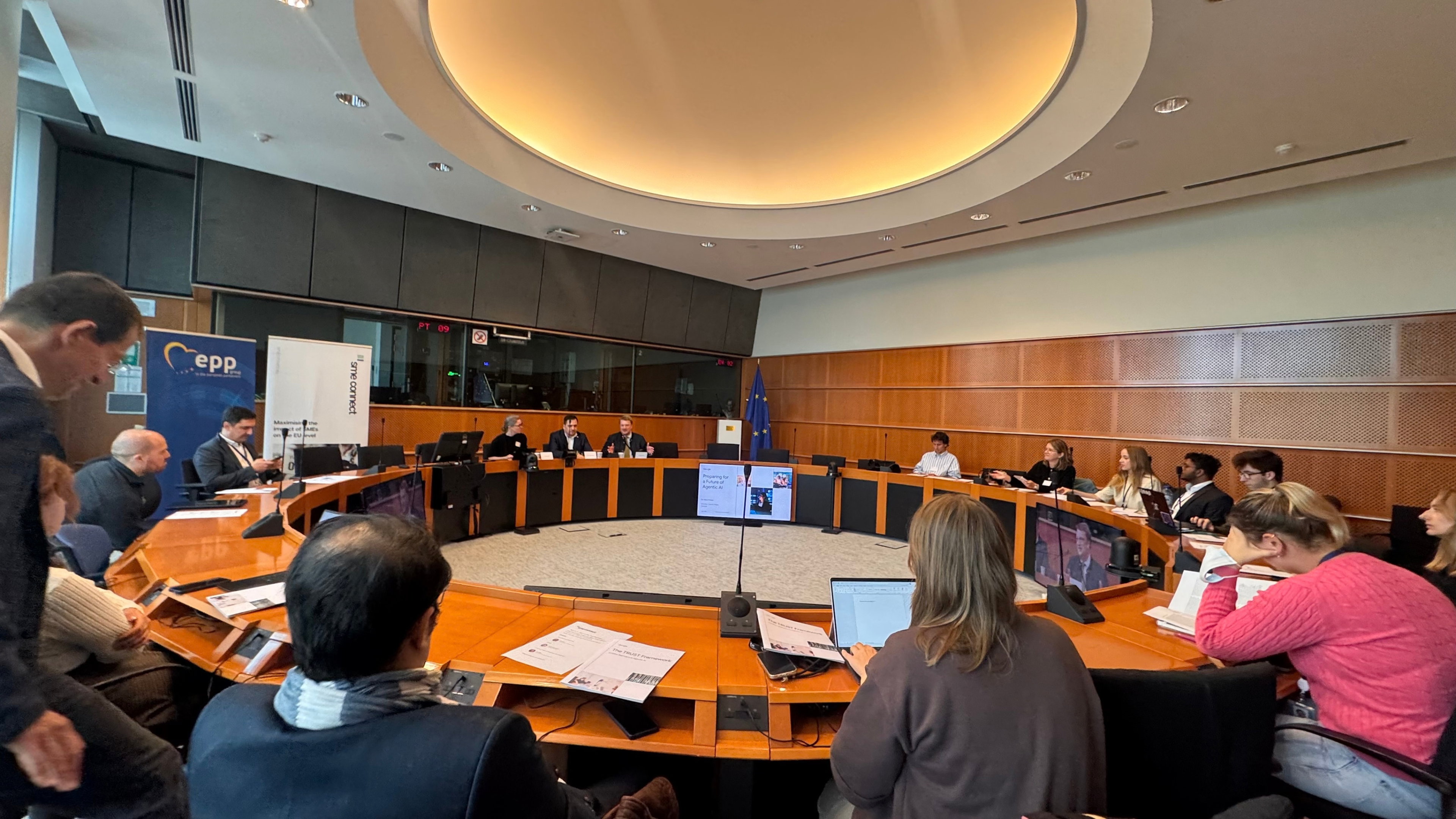
On 1 October 2026, SME Connect organised a Roundtable Discussion titled “Agentic AI: Opportunities and Challenges: How Can Europe Prepare for What Comes Next?” at the European Parliament in Brussels. Hosted by TOMÁŠ ZDECHOVSKÝ MEP, Board Member of SME Connect, the event brought together policymakers, technology companies, think tanks, SME representatives and young entrepreneurs from across Europe to discuss how agentic AI can become accessible, trustworthy and genuinely useful for Europe’s smaller businesses.
The discussion focused on one central question: artificial intelligence is moving beyond the chatbot towards systems that can use tools, complete complex tasks and act on behalf of their users, yet too few SMEs are equipped to turn these capabilities into business advantage.
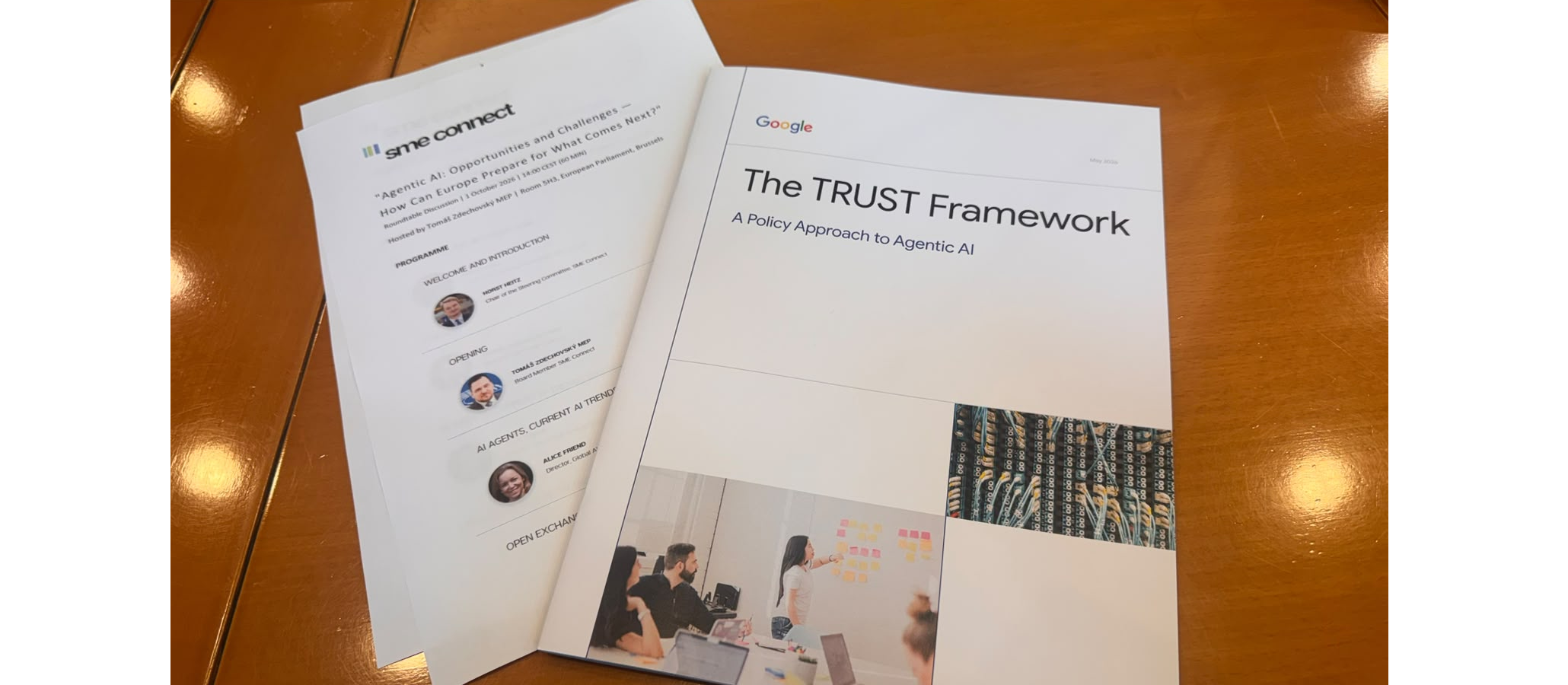
TOMÁŠ ZDECHOVSKÝ MEP, opened the discussion by underlining that AI has become one of the central topics of the European Parliament’s work. He stressed that the European Union does not want regulation that kills the technology, but that unlimited liberty is equally unhelpful, particularly where people are harmed by AI-generated content. The task, he argued, is to find the balance between what AI should be able to do and what it should not.
He also placed the discussion in an economic context. Europe is one of the world’s largest markets and offers predictable conditions for cooperation, but European companies need to use these tools in their daily work, and smaller companies need access to them. He pointed to the steps already taken, including the AI Act adopted in 2024, the Apply AI Strategy and the proposed Cloud and AI Development Act, and insisted on a clear limit on autonomy: an agent may prepare a decision, but a person must check it, and for important decisions people must have the final say. For SMEs without capital or capacity, he noted, AI can be particularly valuable at the very beginning, when a business is starting out and analysing its market.
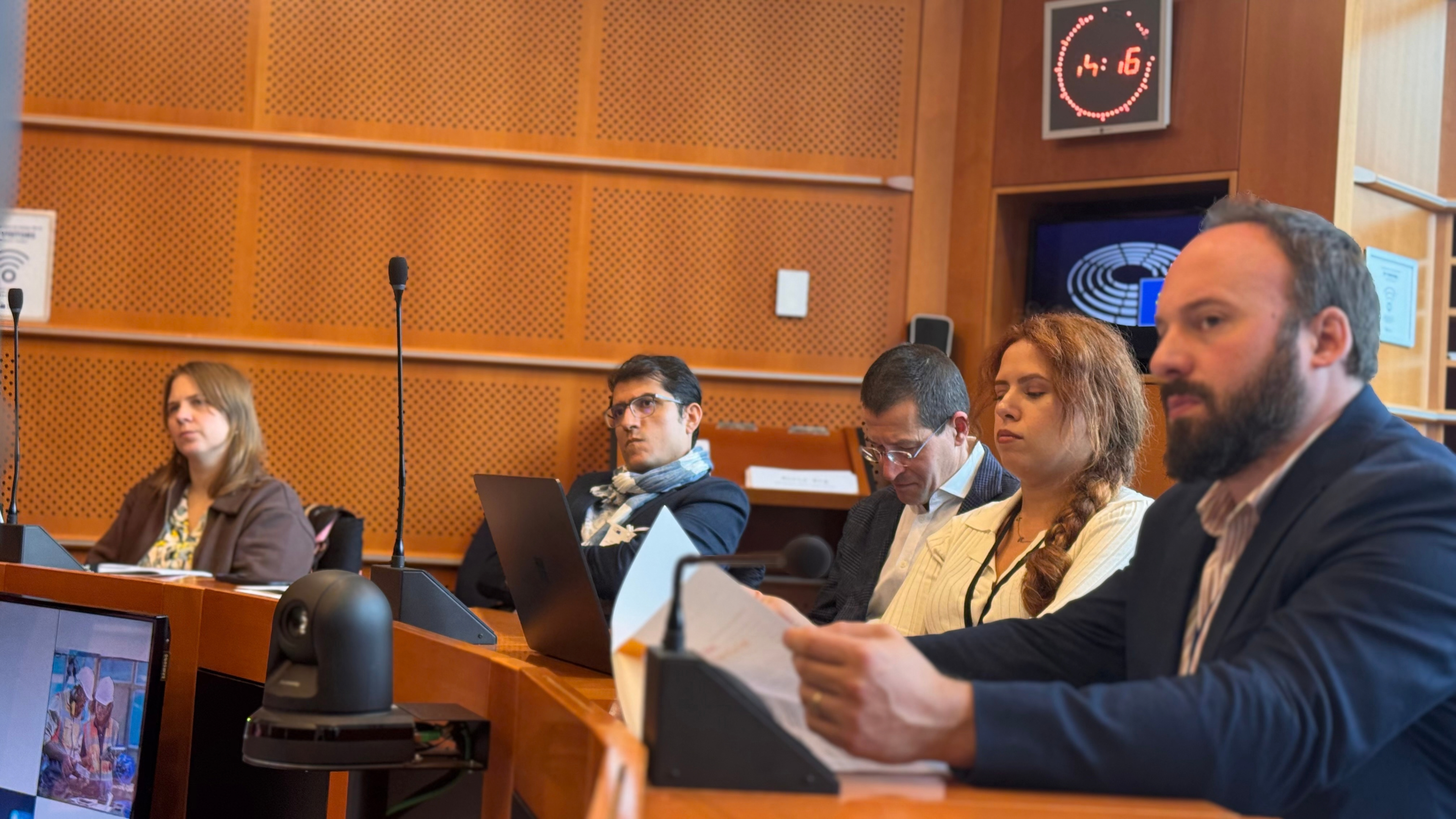
ALICE HUNT FRIEND, Director of Global AI and Emerging Tech Policy at Google, set out what agentic AI is and where it is heading. Agents, she explained, are not a new technology but an evolution of what already exists: a large language model, combined with the ability to draw in other information, to reason and plan, and to use tools in order to execute. Crucially, agentic behaviour is not a binary state but a spectrum, determined by the goal the user sets, the environments the agent is allowed to operate in, the permissions it holds and the actions it is allowed to take. User intent and user control, she argued, are therefore not an add-on but the organising principle.
She illustrated the point with examples from the public sector, cybersecurity and science. An agentic evacuation planning tool has reduced the planning cycle for public safety agencies from sixty hours to two, allowing officials to run far more scenarios. In cybersecurity, the slow part of the work is not finding vulnerabilities but fixing them, which is why Google has invested in an agentic system that repairs them at machine speed so defenders can keep pace with attackers. In research, an agentic co-scientist reviews the literature and helps researchers identify and refine hypotheses that are worth testing in a laboratory.
For smaller businesses, Friend argued, the near-term value lies in the work that consumes an entrepreneur’s time without using their talent: repetitive administration, website maintenance, bookkeeping, tax and government registrations. Beyond that, agents can support strategic decisions by identifying patterns across sales, customers and seasons, and can lower technical barriers for non-technical founders. She was explicit that the industry owes users tools intuitive enough that no graduate degree is required to use them, and that skilling, training and the integration of AI literacy into education are a collective responsibility shared by companies, governments and educational institutions.
She presented Google’s TRUST framework as a way of approaching deployment: transparency, so that users understand what their agents are doing and what controls they have; reliability, so that agents follow direction and stay within defined boundaries; unified protocols and standards, developed through international standards bodies and shared across the industry; safety and security by design; and task augmentation rather than the replacement of workers. On the last point she was emphatic: agents are not designed to replace people, but to take tasks off their plate so that they can concentrate on the work that genuinely requires them.
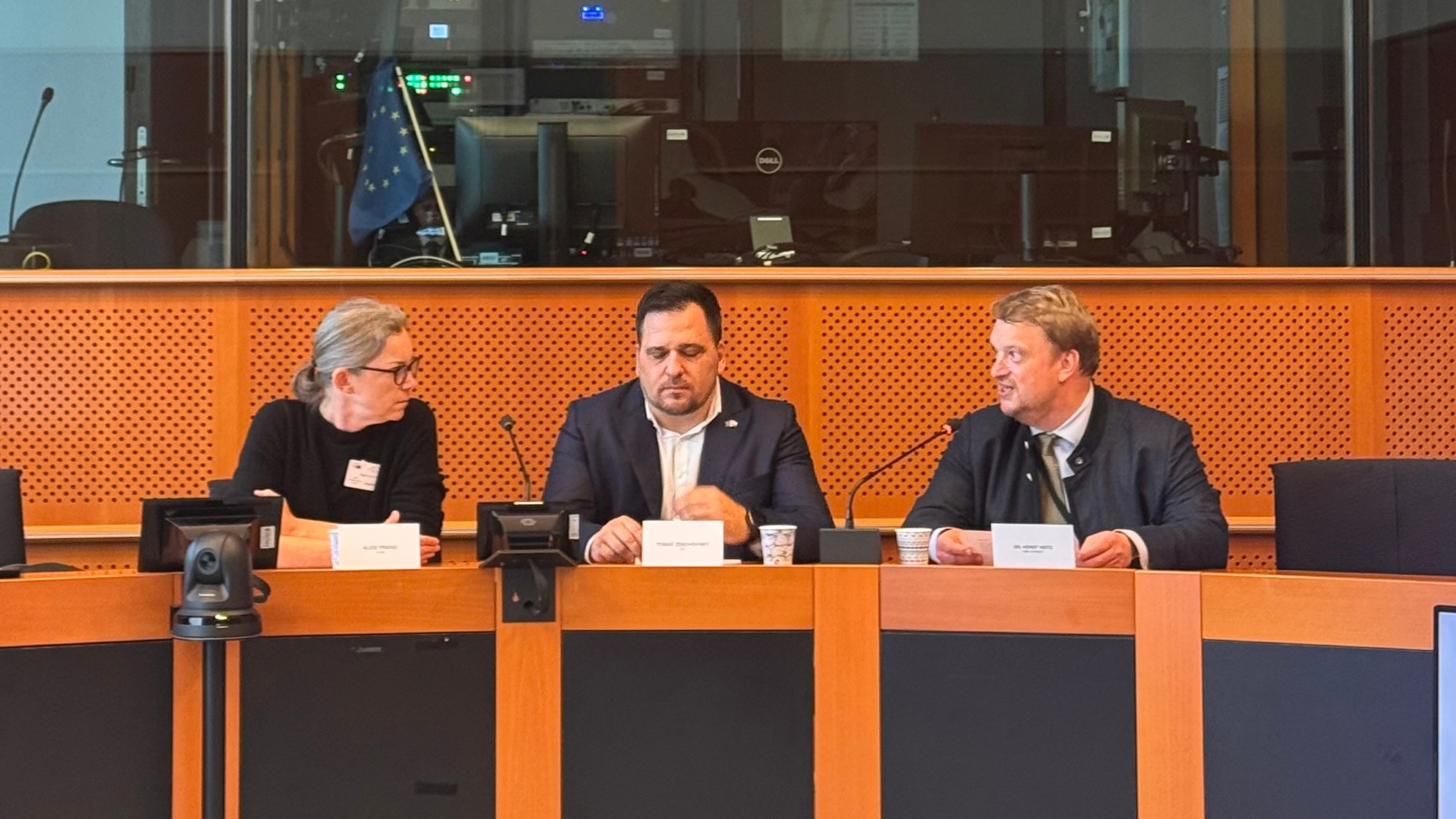
During the open exchange with participants, first-hand experiences brought a concrete and practical dimension to the policy debate, demonstrating that the barriers to adoption are very real.
MATT HAYET, CEO of Manatex, has built an agentic decision-support platform for international market expansion and export. Having run more than five hundred business decision cases across different countries and different language models, the company found that every model showed bias, that the bias was hidden rather than visible, and that it survived the company’s own efforts to clean and narrow its data. His conclusion was that the resulting analysis could not responsibly be passed to clients, because a distorted recommendation can lead a company towards serious loss.
Friend acknowledged the problem directly and described it as a statistical and engineering challenge rather than an insurmountable one. All raw data carries bias, which is why narrower models tend to be more accurate in narrow domains and why grounding a general model in a tightly scoped set of data is an effective mitigation. She also made a point that resonated with the room: in judgement-heavy, context-dependent decisions, the best results may still come from a human working in dialogue with a model, and recognising where the technology is not yet the right tool is part of using it well.
LIDIYA SIMOVA, Parliamentary Assistant in the office of MEP Kristian Vigenin, who worked on the AI Act, observed that the case described was precisely the situation the legislators had in mind: a company bearing full responsibility for a product built on a model whose training it did not control. She also noted, frankly, that the AI Act contains no mention of agentic AI, because the term was absent from the drafting debate, and that a definition may have to arrive through a future omnibus. The wider difficulty, she argued, is that technology evolves faster than legislation can be adopted, and that very few people combine deep engineering expertise with the legal skill to translate it into workable requirements.
Friend offered a complementary perspective: the central regulatory choice is whether to regulate the technology itself or the outcomes that law is trying to prevent and encourage. Privacy law, she suggested, already applies to agents without naming them, and the GDPR does not need to be rewritten for each new technical implementation. The counterpoint from the room was that Europe does regulate some sectors, including car manufacturing, in considerable detail, and that the balance between the two approaches is still to be struck. From the parliamentary side, there was a clear interest in reducing administrative burden on AI products through further omnibus simplification, while maintaining the expectation that European consumers receive both the best and the safest tools on the market.
DESHABHI WEERAWARDANE, President of Junior Enterprises Europe, a network of 36,000 students running more than 300 businesses across the continent, asked who should provide access to these rapidly changing technologies, and what minimum level of AI literacy an entrepreneur or student should have in order to use them well. The answer offered was that no single actor can carry this alone: industry must build tools that are intuitive, governments must invest in skilling and training, and AI will in time be absorbed into school and university curricula in the way computer literacy was a generation ago.
A further contribution from the European Liberal Forum widened the discussion to the longer horizon, asking where the technology is heading and whether more should be done internationally to mitigate the largest risks. Areas worth watching include monitorability of how models reason, world models that give systems an understanding of physical reality, and cybersecurity, where the speed of AI-enabled attacks is matched by the opportunity to produce software with far fewer vulnerabilities. On existential risk, the argument made was that speculative predictions lack any empirical reference class, and that attention and resources are better spent on the concrete risks already visible today, with international cooperation on safety and interoperability as the right frame.
GARETH WALKOM, Founder and CEO of withVR, provides virtual reality speaking environments for speech therapists and researchers, with the technology now used in sixteen countries. Running the company alone, he uses AI agents across his entire workflow to fill the gaps a larger team would cover. Speaking as a person who stutters, he pointed to research from the UK stammering association STAMMA indicating that around sixty-five per cent of business calls from people who stutter are mishandled, and to US research finding that voice AI misinterprets stuttered speech around sixty per cent of the time. As agents increasingly replace human call handlers and act as the first filter on a business call, this becomes a question of access to the economy itself.
His proposal was practical and specifically European: a shared test set of real atypical speech, across the continent’s many languages, that voice agents could be checked against before deployment. The response from the panel was that such an initiative would be unquestionably beneficial, and that helping people gain access to services and experiences they could not otherwise have is among the most compelling reasons to build the technology at all.
The SME voices gave the event its strongest message: Europe’s problem is not a lack of willingness to adopt these tools. The founders present were already using agents across their daily operations, in some cases to run an entire company single-handedly. What holds adoption back is uncertainty about bias, responsibility and legal clarity, and the absence of shared infrastructure that would let smaller companies trust what they are deploying.
HORST HEITZ, Chair of the Steering Committee at SME Connect, closed the discussion by stressing the importance of bringing concrete SME experiences into the Brussels policy debate. While welcoming the TRUST framework, he called for an equally strong focus on opportunities, arguing that Europe must look beyond managing risks to enabling SMEs and society to benefit from new technologies.
The Roundtable concluded that agentic AI offers significant opportunities for European SMEs, but wider adoption will depend on trust, legal clarity, skills and accessibility. As the technology develops, Europe’s challenge will be to ensure that innovation, regulation and practical business needs evolve together.
