
2nd EU–China Round Table:
Strengthening EU–China E-Commerce:
Opportunities, Standards and Practical Market Access for European SMEs to China
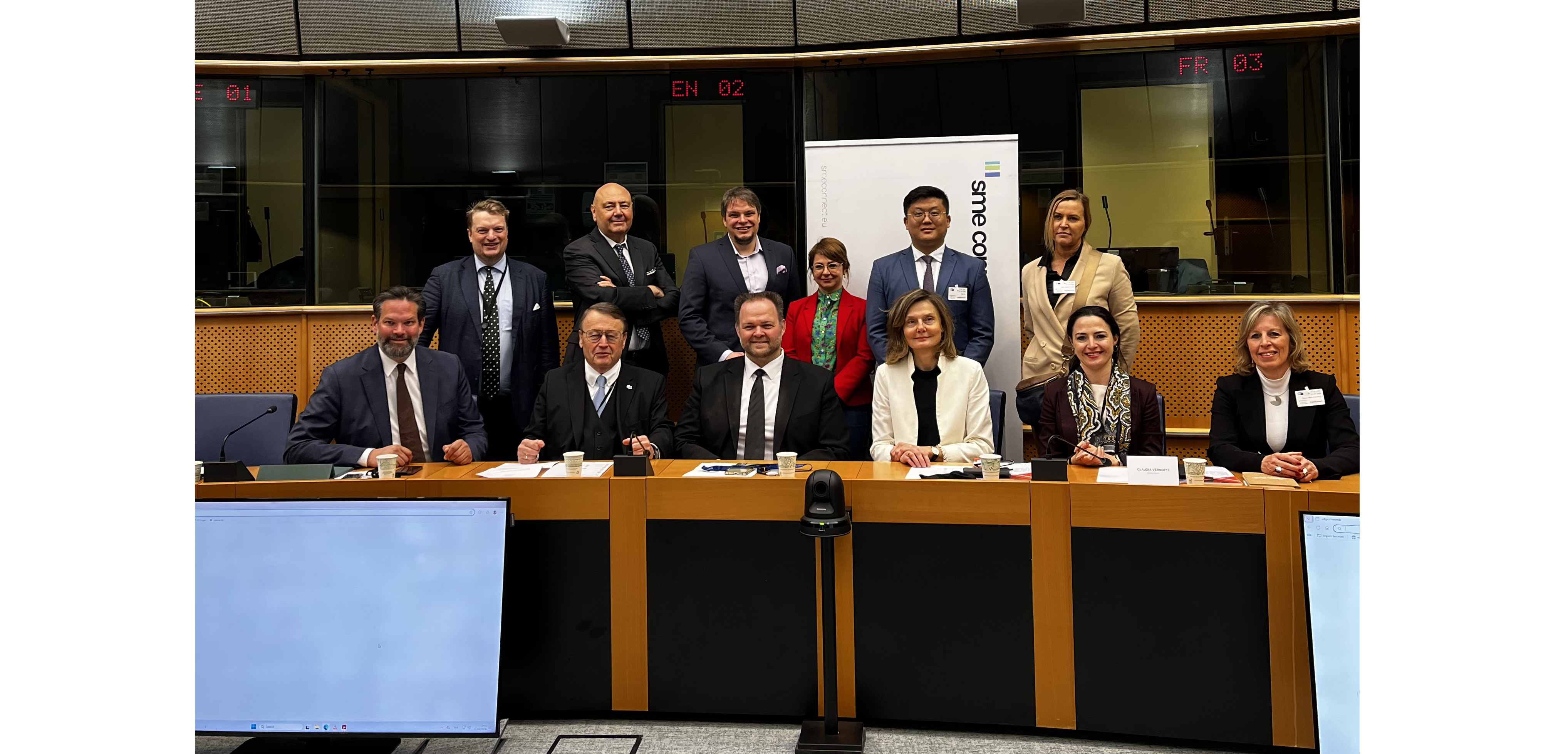
On 21 April, SME Connect organised the 2nd EU–China Round Table, “Strengthening EU–China E-Commerce: Opportunities, Standards and Practical Market Access for European SMEs to China”, hosted at the European Parliament by Engin Eroglu MEP, Chair of the EU–China Delegation and Board Member of SME Connect. Moderated by Horst Heitz, the event gathered policymakers, business representatives, researchers and SME stakeholders to discuss EU–China e-commerce relations and the opportunities and challenges for European SMEs in the Chinese market. Discussions focused on market access, reciprocity, digital platforms, standards enforcement and intellectual property protection.
Paul Rübig, Member of the EESC, Member of the EU–China Roundtable of the EESC and President of SME Connect, opened the discussion by stressing the importance of open trade and balanced economic cooperation. He argued that exports and imports both contribute to increasing purchasing power and strengthening economic growth. Rübig underlined the importance of reciprocity, rules-based trade and Most Favoured Nation principles in e-commerce relations between the EU and China. He concluded that constructive dialogue and practical cooperation remain essential for strengthening opportunities for SMEs.
Engin Eroglu MEP, Chair of the EU–China Delegation and Board Member of SME Connect, warned that Europe is facing a “system shock” caused by Chinese state-subsidised overcapacity. He stressed that Europe must urgently improve its competitiveness through deregulation, affordable energy, innovation and strategic investment. Eroglu also criticised the slow response of European institutions and called for stronger coordination between the Commission, Council and Parliament. At the same time, he advocated for pragmatic engagement with China and direct dialogue with platforms to achieve practical results regarding market access and intellectual property protection.
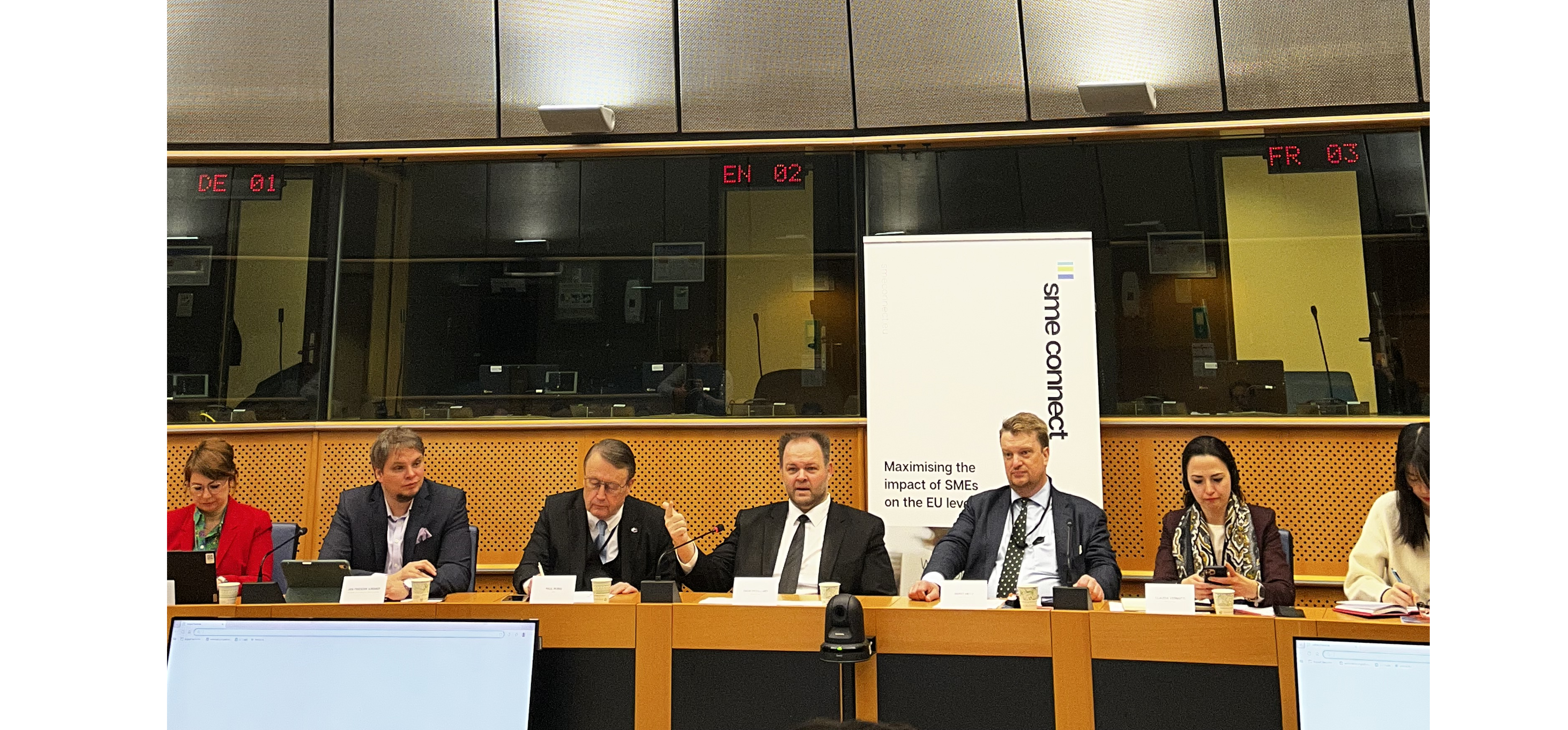
Lukas Mandl MEP, Member of the EU–China Delegation and Board Member of SME Connect, described China as simultaneously a competitive, strategic and systemic counterpart for Europe. He stressed that the EU should neither ignore the challenges posed by China nor actively seek conflict. Mandl emphasised the importance of reciprocity and equal market conditions, particularly regarding investment opportunities and business access. He concluded that cooperation and dialogue remain necessary while ensuring fair competition for European companies.
Joanna Szychowska, Director for Asia, Services and Digital Trade, Investment and Intellectual Property at DG TRADE, focused on the structural imbalances in EU–China trade relations. She highlighted concerns regarding unequal enforcement of rules and standards as well as the rapid expansion of China’s export-oriented production model. Szychowska noted that China remains the world’s largest e-commerce market and that digital trade lowers entry barriers for SMEs. She concluded that fair competition and effective enforcement mechanisms are essential for sustainable trade relations.
Greet DeKocker, Managing Director of BeCommerce, discussed the transformation of consumer behaviour and the increasing dominance of marketplace platforms. She highlighted the growing shift from traditional search engines towards digital marketplaces and social commerce channels. DeKocker also stressed that artificial intelligence is rapidly changing how consumers shop and how businesses operate online. She concluded that Europe must strengthen its competitiveness and innovation capacity in AI-driven commerce.
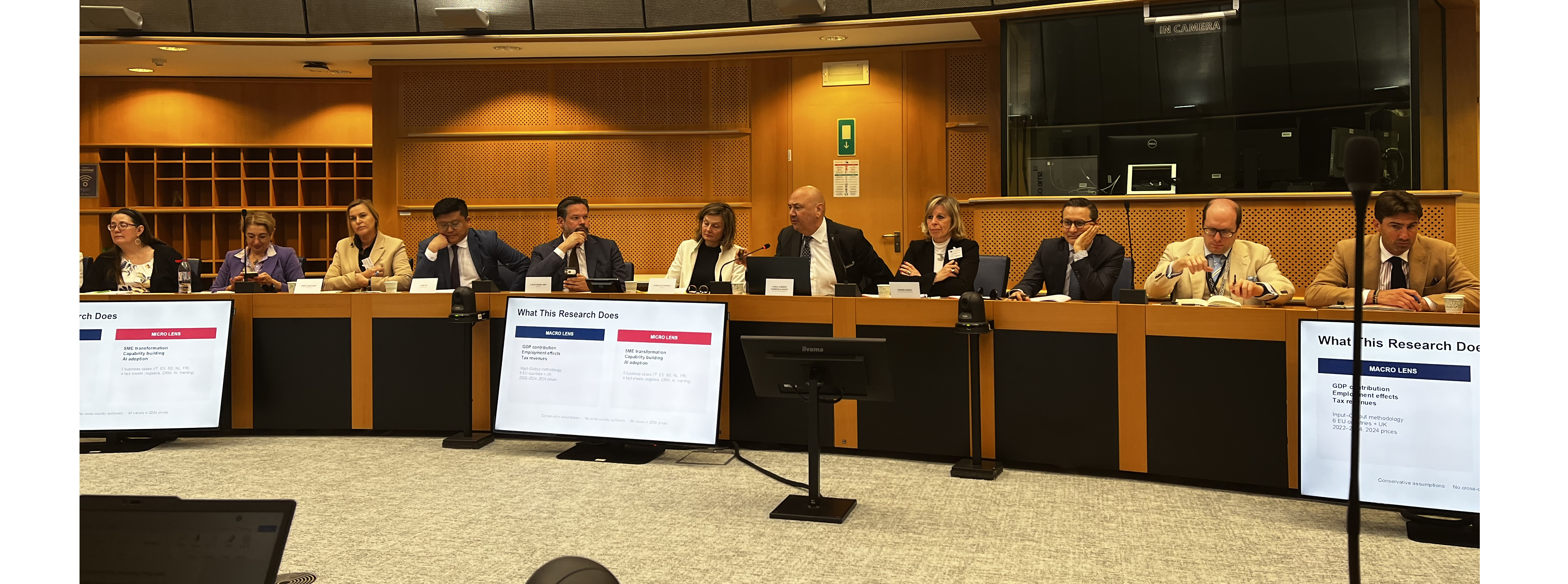
Prof. Dr. Carlo Alberto Carnevale Maffe, Associate Professor of Practice of Strategy and Entrepreneurship at SDA Bocconi School of Management and author of the study “The Contribution of Alibaba to the European Economy and the International Sustainable Development of SMEs – Second Edition”, argued that digital platforms have become essential trade infrastructure for SMEs. He explained that SMEs no longer primarily need embassies or traditional trade missions, but rather access to marketplaces and digital ecosystems. According to Maffe, platforms help SMEs overcome structural limitations related to scale and international reach. He concluded that China should also be viewed as a “learning laboratory” for innovation, social commerce and new business models.
Gwenn Sonck, Executive Director at the EU–China Business Association, emphasised the need for European SMEs to adapt more quickly to Chinese market realities. She stressed that companies seeking success in China must develop a strong online presence and embrace digital strategies tailored to Chinese consumers. Sonck also highlighted the importance of predictability and stable market conditions for businesses planning long-term investments. She concluded that companies capable of succeeding in China are often well-positioned to compete globally.
Liam Jia, Team Leader at the EU SME Centre, focused on the practical challenges SMEs face when entering foreign markets through e-commerce. He explained that exporting often represents the first step in SME internationalisation and depends heavily on access to finance, information and procedures. Jia stressed that cross-border e-commerce can significantly improve market access to China when standards and intellectual property protections are effectively enforced. He concluded that SMEs require continued practical support and guidance to compete successfully in the Chinese market.
Jan-Frederik Kremer, Director General of the German Association of the Cutlery, House- and Cookware Industries “cook, cut and care” and Member of the Executive Board of Directors of the Federation of the European Cookware and Cutlery Industries (FEC), addressed the opportunities and challenges China presents for European manufacturing industries. He stressed that fair competition can only exist when standards relating to product safety, labelling and intellectual property are consistently enforced. Kremer also raised concerns regarding non-compliant products and repeated IP violations on digital platforms. He concluded that stronger market surveillance, merchant verification and practical enforcement measures are urgently needed.
Claudia Vernotti, Head of Government Affairs EU, Belgium & The Netherlands at Alibaba Group, discussed the practical realities European SMEs encounter when trying to access Chinese consumers through digital platforms. She highlighted the importance of understanding Chinese consumer behaviour and selecting the appropriate platform for market entry. Vernotti also stressed the importance of intellectual property protection and regulatory compliance for successful cross-border e-commerce. She concluded that constructive cooperation between European and Chinese stakeholders is essential for improving market access conditions for SMEs.
Cezara Petruc, Liaison Officer at EUIPO, focused on intellectual property protection as a cornerstone of European competitiveness and resilience. She warned about the growing scale of counterfeiting in e-commerce and highlighted that only a small percentage of SMEs currently register their intellectual property rights. Petruc stressed the importance of initiatives such as the SME Fund and practical support tools to help SMEs protect their innovations and brands. She concluded that cooperation and bridge-building remain more effective than confrontation in addressing intellectual property challenges.
The 2nd EU–China Round Table highlighted both the opportunities and challenges shaping EU–China e-commerce relations. Participants agreed that European SMEs require stronger support mechanisms, fair market conditions and reliable intellectual property protection to access the Chinese market successfully. The discussions also underlined the importance of strengthening Europe’s own competitiveness through innovation, digitalisation and strategic economic policies. At the same time, speakers emphasised that constructive dialogue and pragmatic cooperation remain essential for building a fair, resilient and mutually beneficial EU–China economic relationship.